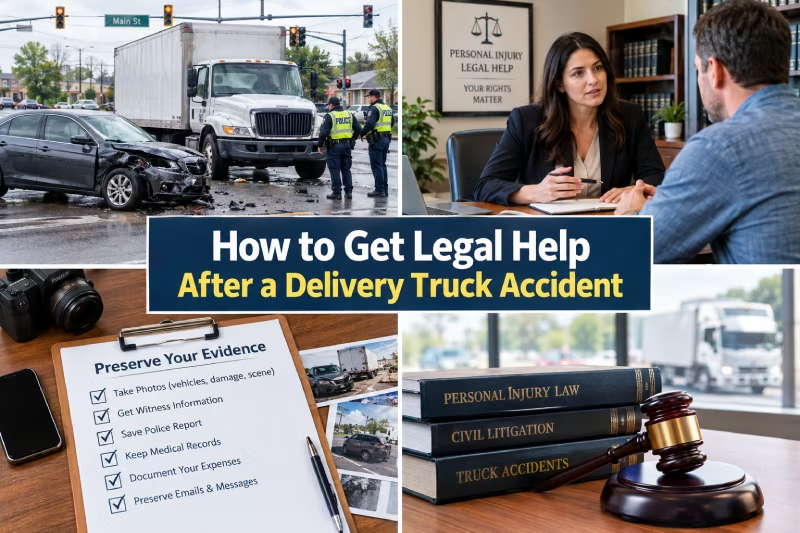
After a delivery truck crash, knowing how to sign up for help after a delivery truck accident can make a major difference in protecting your health, evidence, insurance claim, and potential legal rights. Delivery vehicles are everywhere in the United States, from parcel vans and box trucks to grocery delivery vehicles and larger commercial trucks.
When one is involved in a collision, the process can become more complicated than an ordinary car accident because several parties may be involved, including the driver, delivery company, vehicle owner, contractor, insurer, or another business. This guide explains what to do after the crash, how to find legal assistance, what information to provide during an initial consultation, what a lawyer may investigate, how fees generally work, and what mistakes can make a claim harder to pursue.
What Is a Delivery Truck Accident?
A delivery truck accident is a collision involving a vehicle used to transport or deliver goods. The vehicle might be a small cargo van, step van, box truck, refrigerated truck, straight truck, or another commercial vehicle.
The legal issues can depend heavily on who owned the vehicle, who employed the driver, who controlled the driver's work, and why the driver was on the road when the collision happened.
For example, imagine a delivery driver is traveling between customer stops and rear-ends a passenger vehicle at an intersection. The driver may have been working for a national delivery company, a local contractor, or an independent business. Those details can affect which insurance policies and legal claims need to be examined.
Delivery truck cases may also involve:
- Driver negligence
- Distracted driving
- Fatigued driving
- Speeding
- Following too closely
- Improper lane changes
- Unsafe backing
- Vehicle maintenance problems
- Improper loading
- Brake or tire defects
- Employer negligence
- Negligent hiring or supervision
- Contractor relationships
- Commercial insurance coverage
The fact that a truck has a company logo does not automatically determine who is legally responsible. The underlying business relationship has to be investigated.
Why Delivery Truck Claims Can Be More Complicated
A typical two-car collision may involve two drivers and their personal auto insurers. A delivery truck collision can involve multiple layers of responsibility and insurance.
The driver could be an employee, leased driver, temporary worker, or independent contractor. The vehicle could belong to the delivery company, a contractor, a leasing company, or another business.
There may also be commercial policies with different coverage limits from ordinary personal automobile policies.
This is one reason it is important not to assume that the first insurance representative who calls you has identified every potentially responsible party.
Several Parties May Be Involved
Depending on the facts, a claim may involve:
| Potential party | Why they may matter |
|---|---|
| Delivery driver | May have caused the collision through negligent driving |
| Delivery company | May be responsible for an employee's conduct or separate negligence |
| Vehicle owner | May have responsibilities involving maintenance or ownership |
| Contractor | May have employed or controlled the driver |
| Maintenance company | Could be relevant if faulty maintenance contributed |
| Manufacturer | May matter when a defective component contributed |
| Cargo/loading company | Improper loading can create safety problems |
| Insurance carrier | May provide applicable liability or other coverage |
Not every party listed above will be legally responsible in every case. The purpose of an investigation is to determine which relationships and facts actually apply.
What Should You Do Immediately After the Crash?
The first priority is safety and medical care, not building a lawsuit.
If the collision is serious, call 911 and obtain emergency medical assistance. If you can safely do so, move away from traffic and follow instructions from police and emergency personnel.
Once immediate safety concerns are addressed, take reasonable steps to preserve information.
Gather Basic Accident Information
If your condition allows, try to obtain:
- Names of drivers
- Driver's license information
- License plate numbers
- Insurance information
- Company name
- Vehicle identification information
- Police report information
- Names of witnesses
- Photographs of the vehicles
- Photographs of road conditions
- Photographs of traffic signs or signals
- Photographs of visible injuries
- Videos from the scene, when safe
Do not put yourself in danger to collect evidence.
A delivery truck can contain identifying information on its exterior, including a company name, unit number, USDOT number, or other markings. Photographing this information can be useful.
The Federal Motor Carrier Safety Administration maintains the SAFER system, which provides public carrier information and safety records. Its Company Snapshot can include identification information, inspection information, crash data, and a safety rating when one exists.
Seek Medical Attention Even If Injuries Seem Minor
Some injuries are not immediately obvious after a collision.
Pain, stiffness, headaches, dizziness, back problems, and other symptoms can appear or become more noticeable later. A medical professional should determine what treatment is appropriate.
Keep records of:
- Emergency treatment
- Doctor visits
- Diagnostic testing
- Prescriptions
- Physical therapy
- Specialist appointments
- Medical bills
- Work restrictions
- Travel expenses for treatment
Do not exaggerate symptoms, but do not ignore them either.
For example, someone involved in a delivery truck crash may initially believe they only have minor neck pain. If symptoms continue, delaying medical care can make the person's recovery more difficult and can create questions about the timing of treatment.
How to Find Legal Help After a Delivery Truck Crash
You generally do not need to wait until you know the full value of your claim before speaking with a lawyer.
A personal injury attorney who handles commercial vehicle or truck accident cases can review the basic facts and explain what legal issues may apply.
The Federal Trade Commission advises consumers looking for lawyers to consider relevant experience, consult more than one lawyer when appropriate, ask about who will handle the case, and understand fees and billing before hiring counsel.
Useful places to begin include:
- Your state bar association
- Local bar referral services
- Lawyer referral organizations
- Personal recommendations
- Lawyers who specifically handle truck accident cases
- Attorneys experienced in commercial vehicle litigation
Look for an attorney whose practice actually includes truck and commercial vehicle accidents, rather than assuming every personal injury lawyer handles these cases in the same way.
What Happens During the Initial Consultation?
The first consultation is usually an opportunity for the lawyer to understand what happened and determine whether the firm can take the case.
You should be prepared to explain the collision in a simple timeline.
For example:
8:15 a.m. — You were traveling eastbound.
8:17 a.m. — The delivery truck entered the intersection.
8:17 a.m. — The vehicles collided.
8:30 a.m. — Police and emergency personnel arrived.
9:10 a.m. — You were transported for medical evaluation.
A simple timeline helps an attorney identify questions that need further investigation.
Information to Bring to the Lawyer
If available, provide:
- Police report
- Accident photographs
- Medical records
- Medical bills
- Insurance correspondence
- Insurance policy information
- Employer information
- Witness details
- Vehicle photographs
- Dashcam footage
- Traffic-camera information
- Lost-wage documentation
- Repair estimates
- Vehicle ownership information
- Any correspondence from the delivery company
Do not worry if you do not have everything.
An attorney can tell you what additional information may be needed.
What Will a Truck Accident Lawyer Investigate?
A serious delivery truck case can require considerably more investigation than simply comparing the statements of two drivers.
The lawyer may investigate the driver, company, vehicle, route, employment relationship, insurance coverage, collision scene, and available evidence.
Potential evidence may include:
- Police reports
- Photographs
- Surveillance video
- Dashcam recordings
- Electronic vehicle data
- Driver records
- Delivery schedules
- GPS information
- Vehicle inspection records
- Maintenance records
- Training records
- Company policies
- Employment records
- Commercial insurance policies
- Witness statements
- Medical records
- Accident reconstruction evidence
In appropriate cases, the attorney may also consider whether federal or state commercial motor vehicle rules apply.
The applicable rules can vary based on the vehicle, operation, location, and type of transportation involved. That is why a lawyer should evaluate the actual circumstances instead of assuming that every delivery vehicle is governed by the same federal requirements.
Why Evidence Preservation Matters
Evidence can disappear.
Security-camera systems may automatically overwrite recordings. Vehicles can be repaired or moved. Electronic information can change. Witnesses can forget details.
A lawyer may therefore send a preservation letter, sometimes called a litigation hold or spoliation notice, asking a company or other party to preserve potentially relevant evidence.
This does not guarantee that every piece of evidence will be preserved. It is one part of a broader evidence-preservation strategy.
For example, if a delivery truck had a camera system and the relevant footage was automatically overwritten before anyone requested preservation, an important source of evidence could be lost.
That is why contacting an attorney relatively early can be useful in cases involving significant injuries or disputed responsibility.
How Commercial Truck Accident Liability May Work
One of the central questions is whether the delivery company can be held responsible for the driver's conduct.
In some circumstances, an employer may be legally responsible for an employee's negligent acts performed within the scope of employment. This principle is commonly known as respondeat superior.
However, the answer depends on state law and the facts.
A company may also face separate allegations involving negligent hiring, retention, training, supervision, maintenance, or other conduct where the evidence supports such a claim.
Employee Versus Independent Contractor
The driver's classification can become important.
A business may describe a driver as an independent contractor, but the legal significance of that classification depends on applicable law and the actual relationship between the parties.
Questions can include:
- Who paid the driver?
- Who controlled the driver's work?
- Who supplied the vehicle?
- Who set schedules?
- Who provided training?
- Who controlled routes?
- Who maintained the vehicle?
- Who had the right to supervise the driver?
These questions do not automatically establish liability. They help an attorney determine what legal theories and parties should be investigated.
What Compensation May Be Available?
The damages available in a personal injury case depend on state law and the facts of the injury.
Potential categories can include:
- Medical expenses
- Future medical treatment
- Lost wages
- Reduced earning capacity
- Property damage
- Physical pain
- Emotional distress
- Loss of normal activities
- Other legally recognized damages
A severe injury may affect a person's ability to work for months or permanently. In those circumstances, simply adding existing medical bills may not accurately reflect the financial consequences of the injury.
For example, a delivery truck collision that causes a serious orthopedic injury could involve immediate hospital costs, months of rehabilitation, time away from work, and possible future treatment.
The attorney may work with medical professionals, economists, vocational experts, or other specialists when expert evidence is necessary.
How Do Truck Accident Lawyers Usually Charge?
Many personal injury lawyers handle qualifying cases under a contingency fee arrangement.
Under this type of agreement, the attorney generally receives an agreed percentage of a recovery rather than charging the client an hourly rate for ordinary case work.
However, the exact arrangement varies.
The Federal Trade Commission notes that contingency agreements can involve attorney fees based on a percentage of the recovery, while expenses such as filing fees, depositions, or expert witnesses may be handled separately. The FTC recommends understanding the agreement before signing it and getting the fee arrangement in writing.
Before hiring a lawyer, ask:
- What percentage is charged?
- Does the percentage change if litigation begins?
- Are case expenses separate?
- Who pays litigation expenses if there is no recovery?
- Are medical liens deducted from the settlement?
- How are costs handled before distribution?
- Will the agreement explain everything in writing?
Do not rely on verbal assumptions.
What Questions Should You Ask a Lawyer?
A consultation is also an opportunity for you to evaluate whether the attorney is appropriate for your situation.
Consider asking:
- How much experience do you have with delivery truck crashes?
- Have you handled cases involving commercial insurance?
- Who will personally manage my case?
- Will your firm investigate the delivery company and driver?
- How will evidence be preserved?
- What are the major issues you see in my case?
- What information do you need from me?
- How are attorney fees calculated?
- How are case expenses handled?
- How will I receive updates?
A lawyer should be able to explain the process in language you understand.
Do Not Rush Into an Insurance Settlement
After a crash, an insurance company may contact you quickly.
That does not automatically mean the insurer is acting improperly. Insurance companies have legitimate reasons to investigate claims.
However, an early settlement offer may not account for the full extent of an injury, future medical treatment, lost earning capacity, or other damages that have not yet become clear.
Before signing a release or accepting a settlement, understand what rights you are giving up.
Once a settlement agreement and release become binding, pursuing additional compensation may be difficult or impossible depending on the circumstances and applicable law.
Be Careful With Recorded Statements
An insurer may ask for a recorded statement.
You should answer truthfully. But if you have a serious injury or the circumstances are disputed, it may be sensible to understand your legal rights before providing a detailed statement.
Never guess.
If you do not remember something, saying that you do not remember is better than inventing an answer.
Do Not Post Case Details on Social Media
Social media posts can become evidence in litigation.
Avoid posting:
- Detailed descriptions of the crash
- Arguments about who was responsible
- Photos that contradict claimed limitations
- Settlement discussions
- Private communications with your lawyer
- Statements about how much money you expect
- Speculation about the other driver
This does not mean you must disappear from social media. It means you should use caution and discuss case-related communications with your attorney.
Understanding the Importance of Truck Crash Statistics
Commercial vehicle collisions are a significant national safety issue.
FMCSA's Large Truck and Bus Crash Facts reports that approximately 503,000 police-reported crashes involving large trucks occurred in 2022. The same report identified about 5,279 fatal crashes and approximately 114,000 injury crashes involving large trucks that year.
FMCSA also reported that 5,837 large trucks were involved in fatal crashes in 2022, while approximately 120,000 large trucks were involved in injury crashes.
These figures cover large trucks generally and should not be interpreted as statistics specifically for delivery vans or every type of delivery vehicle.
They do, however, show why commercial vehicle collisions can involve serious injuries and why careful investigation matters.
What If the Delivery Company Disputes Responsibility?
Do not assume that the company's version of events is the final word.
A dispute may involve questions such as:
- Was the driver actually working?
- Was the driver making a delivery?
- Was the driver on a personal trip?
- Was the driver speeding?
- Was the driver distracted?
- Was the truck properly maintained?
- Was the load secured?
- Did another vehicle cause the crash?
- Was there a mechanical failure?
- Was the driver properly trained?
Evidence, rather than assumptions, should answer these questions.
For example, a company may initially state that its driver was not responsible. Later, available video may show that the truck entered an intersection against a traffic signal. That is why collecting and preserving evidence can be important.
What If You Were Partly at Fault?
Do not assume that making a mistake automatically eliminates your claim.
Many U.S. states use comparative-fault rules, but the details differ substantially from one state to another.
Depending on the jurisdiction, your recovery may be reduced according to your percentage of fault, or additional rules may apply.
For example, if a court determines that a person was partly responsible for a collision, the amount recoverable could be affected by that finding. The exact rule depends on the state where the claim is brought.
This is one reason a lawyer needs to know where the accident occurred before giving a detailed assessment.
Watch the Statute of Limitations
Every injury claim has deadlines.
The deadline for filing a lawsuit is commonly called the statute of limitations, but there is no single nationwide deadline for delivery truck accident cases.
The time limit can depend on:
- State law
- Type of claim
- Government involvement
- Age of the injured person
- Nature of the defendant
- Date the injury was discovered
- Other special circumstances
Claims involving a government vehicle or government entity may involve additional notice requirements and shorter deadlines in some jurisdictions.
Do not assume that you have several years simply because another state uses a longer period.
A lawyer should determine the applicable deadlines based on the specific facts and location.
A Practical Checklist for Getting Legal Help
If you were injured in a delivery truck crash, use this checklist:
- Get emergency medical care when needed.
- Report the collision to law enforcement.
- Photograph the accident scene if safe.
- Record the delivery company's information.
- Collect witness contact information.
- Keep medical records and bills.
- Track time missed from work.
- Save insurance correspondence.
- Do not sign a settlement release without understanding it.
- Avoid discussing faults publicly.
- Preserve photographs, videos, and messages.
- Identify the truck's company and vehicle information.
- Speak with a qualified attorney when the claim is serious or disputed.
- Ask for the fee agreement in writing.
- Confirm important legal deadlines.
Example: How a Consultation Can Change the Investigation
Consider a hypothetical collision involving a delivery box truck and a passenger vehicle.
The passenger initially believes the matter is simple because the truck driver apologized at the scene.
During a legal consultation, additional questions arise.
- Was the driver an employee?
- Was the driver completing deliveries?
- Did the truck have a camera?
- Was the truck maintained by the delivery company?
- Was the driver operating under a contractor agreement?
- Did the company have commercial liability coverage?
Each question can lead to another source of evidence.
The purpose of legal help is not simply to send a demand letter. In a serious case, it can involve identifying the correct parties, preserving evidence, establishing liability, documenting damages, negotiating with insurers, and preparing for litigation if necessary.
How to Check a Delivery Company's Safety Information
If you know the company or USDOT number, you may be able to research publicly available federal carrier information.
FMCSA's SAFER system allows users to search for a carrier and review a Company Snapshot. The information can include the carrier's identification information, size, cargo information, inspection summary, crash information, and safety rating when applicable.
FMCSA also cautions users not to draw broad conclusions about a carrier's overall safety condition from SMS information alone.
This information can be a useful background, but it does not replace a legal investigation into your particular collision.
How to Protect Your Claim While Your Case Is Pending
Once you have legal representation, stay organized.
Create a folder containing:
- Medical documents
- Insurance letters
- Accident photographs
- Wage information
- Repair records
- Prescription records
- Transportation expenses
- Attorney correspondence
Follow medical instructions and attend appropriate appointments.
Tell your lawyer if your symptoms change, your employment situation changes, or an insurer contacts you.
Most importantly, do not hide unfavorable facts from your attorney.
Your lawyer needs the complete story—including facts you believe may hurt your claim—to give you informed legal advice.
Key Takeaways So For
Getting assistance after a delivery truck crash starts with protecting your health, preserving evidence, identifying the responsible parties, and obtaining reliable information about your legal options.
A delivery truck accident can involve more than the person sitting behind the wheel. Depending on the facts, the investigation may need to examine the driver's employment status, the delivery company's role, vehicle ownership, maintenance, commercial insurance, training, route information, and other evidence.
You should also remember that no lawyer can guarantee a settlement or a particular result. Case value and legal responsibility depend on the evidence, applicable state law, insurance coverage, injuries, damages, and many other factors.
The Federal Trade Commission recommends asking detailed questions about a lawyer's experience, fees, case handling, and communication practices before hiring counsel.
For current commercial vehicle information, FMCSA's public safety resources and SAFER system can provide useful background information about motor carriers.
If you have been seriously injured, the most practical next step is to organize your accident and medical information and speak with a qualified attorney who handles commercial vehicle injury cases in the state where the collision occurred.
The sooner important evidence is identified and preserved, the easier it may be to build a clear factual record of what happened.
Authoritative reference links
What Evidence Can Help Prove a Delivery Truck Accident Claim?
A delivery truck accident claim is often decided by the quality of the evidence. The police report is important, but it is only one part of the overall picture. A thorough investigation may require information from the vehicles, drivers, delivery company, witnesses, medical providers, insurers, and other sources.
Some evidence may be easy for an injured person to obtain, while other evidence may require a formal request, subpoena, or attorney investigation.
Common evidence includes:
- Accident photographs
- Vehicle damage photographs
- Dashcam footage
- Traffic-camera recordings
- Security-camera video
- Police reports
- Witness statements
- Medical records
- Medical bills
- Employment records
- Delivery records
- Driver schedules
- Vehicle maintenance records
- Driver training records
- Electronic logging device information
- GPS or fleet-management information
- Commercial insurance documents
- Vehicle inspection records
The importance of each item depends on the circumstances of the collision.
Electronic Data May Be Important
Modern commercial vehicles can generate substantial amounts of electronic information.
For commercial drivers who are subject to federal electronic logging device requirements, an ELD can automatically record driving time and other hours-of-service information. FMCSA explains that ELDs are intended to make records of duty status easier and more accurate.
These records may become relevant when there is a question about driver fatigue, hours worked, or the driver's activities before the collision.
For example, suppose a delivery driver claims that they had only been working for a short period before a crash. If applicable electronic records show a substantially different work history, those records could become relevant to the investigation.
An ELD does not automatically prove that a driver caused an accident. It is one source of evidence that must be considered together with the crash scene, witness accounts, vehicle data, medical evidence, and other facts.
FMCSA states that motor carriers generally must retain records of duty status and supporting documents for six months.
That makes early evidence preservation particularly important in cases where electronic records may matter.
Can Delivery Routes and GPS Records Matter?
They can.
Delivery companies may use routing software, GPS systems, fleet-management platforms, mobile applications, or other technology to coordinate deliveries.
Depending on the system and applicable law, records may help establish:
- Where the vehicle was traveling
- Whether it was completing a delivery
- Approximate travel times
- Stops made during a route
- Whether the driver was on duty
- The relationship between the driver and company
- Whether the vehicle was following an assigned route
The availability and retention period of these records can vary.
A lawyer may therefore send a preservation request identifying categories of information that could be relevant to the collision.
For example, if a delivery truck was allegedly speeding immediately before impact, information concerning its movement before the crash could become relevant. But GPS information should not automatically be treated as a precise speed measurement. The specific technology and available data must be examined.
What About Delivery Apps or Mobile Phone Records?
A delivery driver may use a phone or company-issued device to receive:
- Delivery assignments
- Customer addresses
- Route instructions
- Navigation directions
- Messages
- Work notifications
- Other job-related information
Phone use can become relevant when distracted driving is suspected.
However, an attorney should distinguish between evidence showing that a device was active and evidence proving that the driver was actually distracted by that device at the moment of impact.
For example, a text message sent several minutes before a collision does not by itself establish that the driver was texting at the exact time of the crash.
A proper investigation looks at the complete timeline.
How Do Witnesses Help a Delivery Truck Case?
Independent witnesses can provide valuable information when the drivers give conflicting accounts.
A witness might have observed:
- Which vehicle entered the intersection first
- Whether a truck was speeding
- Whether a driver was using a phone
- Whether a truck failed to yield
- Whether the truck was backing up
- Whether a traffic signal was red or green
- Whether another vehicle suddenly entered the truck's path
Write down witness contact information as soon as reasonably possible.
Memory can change over time.
A witness who clearly remembers a vehicle's position immediately after a collision may remember fewer details several months later.
Nearby Businesses May Have Video
A delivery truck collision may happen near:
- Gas stations
- Restaurants
- Retail stores
- Apartment buildings
- Warehouses
- Parking lots
- Banks
- Intersections
- Shopping centers
These locations may have exterior security cameras.
A lawyer may investigate whether the video existed and whether it was preserved.
The important point is timing. Some businesses routinely overwrite recordings after a relatively short period.
If a serious collision happened outside a business, telling an attorney about nearby cameras can help direct an early investigation.
How Are Police Reports Used?
The police report can provide a useful starting point.
It may contain:
- Driver information
- Vehicle information
- Statements
- Diagram or crash description
- Officer observations
- Citations
- Insurance information
- Witness information
But a police report is not necessarily the final determination of civil liability.
An officer may have arrived after the vehicles moved, may not have witnessed the collision, or may have had incomplete information at the scene.
A civil injury claim can involve evidence that was not available to the responding officer.
For example, a police report may state that a truck driver said the passenger vehicle changed lanes suddenly. Later, a nearby camera may show a different sequence of events.
That is why lawyers generally evaluate the entire evidence record, rather than relying on one document.
What If the Driver Received a Traffic Citation?
A traffic ticket can be relevant, but it does not automatically determine the outcome of a personal injury case.
The effect of a citation can depend on state law, the precise violation, the evidence supporting it, and whether the citation was contested or resolved.
A lawyer may want to obtain:
- Citation information
- Court records
- Officer notes
- Accident reconstruction information
- Witness statements
- Video evidence
Do not assume that a citation guarantees compensation.
Likewise, the absence of a citation does not necessarily mean that no civil claim exists.
How Does Accident Reconstruction Work?
In more serious or disputed cases, an accident reconstruction professional may be consulted.
An accident reconstruction analysis can consider factors such as:
- Vehicle positions
- Damage patterns
- Skid marks
- Road geometry
- Traffic signals
- Vehicle weights
- Speed estimates
- Visibility
- Reaction time
- Time-distance relationships
- Event data
- Video evidence
The purpose is to develop an evidence-based explanation of how the collision occurred.
For example, if the parties disagree about whether a delivery truck had enough time to stop, an expert may analyze available evidence concerning distance, speed, roadway conditions, braking, and perception-reaction time.
Not every case requires an accident reconstruction expert.
The need for expert testimony depends on the complexity and dispute involved.
What If the Delivery Truck Was Backing Up?
Backing collisions deserve careful investigation because large delivery vehicles can have significant areas with limited rear visibility.
NHTSA has researched rear visibility and backover crashes and has noted that blind areas can vary by vehicle type and driver eye height.
A backing collision may raise questions about:
- Mirrors
- Rear cameras
- Spotters
- Warning devices
- Driver awareness
- Parking-lot layout
- Pedestrian or vehicle visibility
- Company procedures
- Whether the driver should have used another method to verify the area was clear
The applicable legal standard depends on the circumstances and state law.
For example, if a delivery driver backs out of a commercial parking space and strikes a pedestrian or another vehicle, investigators may examine what the driver could see, what the driver actually did, and whether other evidence shows that reasonable precautions were taken.
What If the Truck Had a Blind Spot?
Large commercial vehicles can have visibility limitations.
A driver may not see another vehicle, cyclist, pedestrian, or object in certain areas around the truck.
But saying that a vehicle was in a blind spot does not automatically establish that the truck driver was legally responsible.
The relevant question is what reasonable precautions were required under the circumstances and whether the driver failed to take them.
A case may involve:
- Mirror use
- Lane-change timing
- Turn signals
- Speed
- Traffic conditions
- Vehicle positioning
- Camera systems
- Driver behavior
- Road design
Evidence is especially important when the collision occurred during a lane change or turn.
What If the Delivery Company Says the Driver Was an Independent Contractor?
This is a common issue in commercial transportation cases.
A company may use contractors to perform deliveries rather than directly employing every driver.
But the label alone does not necessarily answer every legal question.
An attorney may investigate the actual relationship between the business and driver, including:
- Who hired the driver
- Who paid the driver
- Who owned the vehicle
- Who controlled the schedule
- Who assigned deliveries
- Who provided training
- Who supervised the driver
- Who controlled work methods
- Who maintained the vehicle
Different legal tests may apply depending on the claim and jurisdiction.
That is why an injured person should not abandon a potential claim simply because someone says, "The driver is a contractor."
The underlying facts need to be examined.
What Insurance Policies May Be Involved?
Delivery truck accidents can involve several types of insurance.
Potential coverage may include:
- Commercial auto liability insurance
- Business liability coverage
- Employer-related coverage
- Contractor insurance
- Vehicle owner's insurance
- Excess or umbrella coverage
- Your own uninsured or underinsured motorist coverage, where applicable
The exact coverage available depends on the policies, the parties, the accident circumstances, and state law.
Insurance limits can become especially important in catastrophic injury cases.
Imagine a person suffers a permanent disability after being struck by a commercial delivery truck. The claim could involve years of medical care and significant loss of income. Identifying every potentially applicable policy may therefore be an important part of the investigation.
What If the Delivery Truck Was Owned by Someone Else?
Vehicle ownership and company operation are not always the same thing.
A delivery business might:
- Own its vehicles
- Lease vehicles
- Use contractor-owned vehicles
- Use fleet-management companies
- Rent vehicles temporarily
The ownership documents can help establish who had responsibilities involving the vehicle.
A lawyer may investigate registration records, lease agreements, maintenance arrangements, and commercial insurance documents.
The person whose name appears on the truck does not automatically become responsible for every collision involving it.
Again, the legal relationship matters.
What If Poor Maintenance Caused the Crash?
Not every truck accident is caused entirely by driver conduct.
Mechanical problems can sometimes contribute to a collision.
Potential issues may include:
- Brake failure
- Tire problems
- Steering problems
- Lighting defects
- Suspension problems
- Defective components
- Improper repairs
If a mechanical issue is suspected, the vehicle itself can become important evidence.
Repairing, dismantling, or disposing of a vehicle before the relevant evidence is documented can complicate a later investigation.
For serious cases, attorneys may take steps to preserve the vehicle and inspect it through appropriate legal procedures.
Could a Manufacturer Be Responsible?
Sometimes a defective product may contribute to a collision.
Potentially relevant products can include:
- Tires
- Braking components
- Steering components
- Safety equipment
- Vehicle systems
A product liability case has its own legal requirements, which vary by state.
Evidence can include the vehicle's maintenance history, component identification, inspection results, engineering information, and expert analysis.
It is important not to label a component defective simply because it failed.
A failure can have many causes, including wear, improper maintenance, misuse, installation problems, or another event.
What If Poor Loading Caused the Collision?
Cargo can affect vehicle stability and handling.
Depending on the type of delivery operation, investigators may examine whether goods were:
- Properly secured
- Properly distributed
- Within applicable weight limits
- Loaded according to company procedures
For example, a heavily loaded delivery vehicle may behave differently during emergency braking than an empty vehicle.
If cargo shifted before a collision, evidence concerning how it was loaded and secured may become relevant.
This issue can be particularly important when the collision involved rollover, loss of control, or unusual vehicle movement.
What Should You Tell Your Lawyer About Your Injuries?
Give your lawyer a complete medical picture.
Explain:
- Where you hurt
- When symptoms started
- What treatment you received
- What doctors told you
- Whether you missed work
- Whether daily activities became difficult
- Whether symptoms continue
- Whether additional treatment was recommended
Do not minimize your injuries because you feel uncomfortable discussing them.
At the same time, do not exaggerate.
Accurate information helps your attorney understand the case and communicate with medical and legal professionals appropriately.
Keep an Injury Journal
A simple daily record can help you remember how an injury affects your life.
You might record:
Pain: Neck pain increased after sitting for two hours.
Work: Unable to complete normal lifting duties.
Sleep: Woke several times because of discomfort.
Treatment: Attended physical therapy.
Daily activity: Needed assistance carrying groceries.
A journal is not a substitute for medical records, but it can help document changes over time.
How Are Lost Wages Calculated?
Lost income can include more than the days immediately missed from work.
Depending on state law and the evidence, a claim may involve:
- Missed workdays
- Reduced hours
- Lost overtime
- Lost bonuses
- Reduced earning ability
- Future income losses
Documentation is important.
Useful records may include:
- Pay stubs
- Tax documents
- Employer statements
- Attendance records
- Employment contracts
- Commission statements
- Work restrictions
For a self-employed person, documenting lost income can be more complicated.
Business records, invoices, tax returns, contracts, and other financial evidence may be needed.
What Happens if Your Employer Will Not Confirm Lost Time?
An attorney can help identify alternative documentation.
Evidence may include:
- Payroll records
- Medical work restrictions
- Tax filings
- Scheduling records
- Emails
- Employment records
- Bank statements
- Business records
The key is to build a reliable record showing what income was actually lost and why.
For example, if a physician restricted an injured worker from lifting more than 10 pounds and the worker's job requires frequent heavy lifting, that restriction may help explain why the worker could not perform normal duties.
What If You Cannot Afford Medical Treatment?
Do not simply stop necessary medical care without discussing the situation with your healthcare provider.
If cost is becoming a problem, ask the medical provider about available payment options and discuss the issue with your attorney.
Depending on the circumstances, there may be health insurance, medical-payment coverage, negotiated arrangements, or other possible sources of payment.
The availability of any particular option depends on the facts and applicable law.
What Happens After You Hire a Lawyer?
The process often begins with investigation and evidence collection.
Your attorney may:
- Review the collision.
- Identify potential defendants.
- Investigate insurance coverage.
- Collect medical records.
- Preserve relevant evidence.
- Communicate with insurers.
- Evaluate damages.
- Determine whether expert testimony is needed.
- Prepare a demand or other claim submission.
- Negotiate with the relevant parties.
- File a lawsuit if appropriate.
- Prepare for discovery and possible trial.
Not every case reaches every stage.
Many injury cases resolve through negotiation, while others proceed into litigation.
The timeline can vary substantially.
What Is a Demand Letter?
A demand letter is a formal communication presenting a claim to an insurer or opposing party.
It may explain:
- How the accident occurred
- Why the recipient is considered responsible
- The injuries involved
- Medical treatment
- Financial losses
- Other damages
- Supporting evidence
- The amount being demanded, when appropriate
A demand letter is not the same thing as filing a lawsuit.
It is often part of the negotiation process.
A strong demand should be based on evidence rather than exaggerated statements.
What If the Insurance Company Rejects the Claim?
A denied claim does not necessarily end the matter.
The attorney may review the denial and determine whether:
- Additional evidence is available
- The insurer misunderstood the facts
- Another party should be pursued
- Additional insurance coverage exists
- A lawsuit should be considered
- Negotiation should continue
The appropriate response depends on the reason for the denial and the legal deadlines involved.
Never assume that a verbal statement such as "the claim is denied" means there are no further options.
Ask for important decisions in writing.
What Happens if a Lawsuit Is Filed?
A lawsuit formally begins the court process.
Depending on the jurisdiction, the stages may include:
- Complaint
- Service of process
- Answer
- Discovery
- Depositions
- Expert disclosures
- Motions
- Settlement negotiations
- Mediation
- Trial
Discovery can be especially important in commercial vehicle cases.
Your lawyer may seek information concerning the driver's activities, vehicle condition, company policies, insurance, maintenance, training, and other relevant matters.
The opposing side can also request information from you.
That is normal.
What Is a Deposition?
A deposition is a formal question-and-answer session, generally conducted under oath, before trial.
The attorneys may ask about:
- How the collision happened
- Your injuries
- Medical treatment
- Employment
- Prior relevant injuries
- Daily activities
- Statements you made
- Photographs
- Other evidence
A deposition is not a casual conversation.
Your attorney should prepare you beforehand.
The best approach is generally to listen carefully, answer truthfully, and avoid guessing.
If you do not understand a question, you can ask for clarification.
Why Medical History May Matter
An opposing insurer or lawyer may investigate whether symptoms were caused by the accident or existed beforehand.
That does not mean a pre-existing condition automatically prevents recovery.
A collision can aggravate a previous condition.
The important issue is often what the evidence shows about the person's condition before and after the crash.
For example, if someone had occasional back discomfort before a delivery truck collision but became unable to work after the crash, medical evidence may be needed to determine what changed.
Tell your lawyer about relevant prior conditions rather than hiding them.
Complete information allows your attorney to prepare for questions before they arise.
What If You Were Injured While Working?
A delivery truck collision may also involve employment-related issues if you were working at the time.
For example, a delivery driver may be injured while:
- Making a delivery
- Loading cargo
- Unloading cargo
- Driving between stops
- Working in a warehouse
- Entering or leaving a delivery location
Workers' compensation laws may apply in some employment situations, while a third-party injury claim may also be possible under certain circumstances.
These are fact-specific issues.
Do not assume that workers' compensation is your only possible source of recovery, and do not assume that a third-party claim automatically exists.
An attorney may need to examine the identities of the employer, vehicle owner, driver, and other parties.
What If a Child or Elderly Person Was Injured?
Injuries involving children or older adults can raise additional legal and medical issues.
For children, the law may contain special rules concerning:
- Legal representation
- Settlement approval
- Statutes of limitation
- Court procedures
- Future medical needs
For older adults, damages may involve:
- Long-term care
- Rehabilitation
- Home assistance
- Loss of independence
- Medical equipment
The exact rules differ by state.
Families should obtain legal advice specific to the injured person's age and circumstances.
How Should Families Handle a Fatal Delivery Truck Crash?
A fatal commercial vehicle collision is fundamentally different from a routine property-damage claim.
Family members may have potential wrongful-death or survival claims depending on state law.
Potential issues can include:
- Funeral expenses
- Medical expenses before death
- Lost financial support
- Loss of services
- Loss of companionship
- Other damages recognized by state law
The people legally entitled to bring such claims can vary by jurisdiction.
The statute of limitations may also differ from ordinary personal injury cases.
A family should therefore obtain prompt advice from a qualified attorney rather than relying on a general online deadline.
How Can You Tell Whether a Lawyer Is a Good Fit?
There is no universal checklist that guarantees a particular lawyer will be right for every case.
Instead, focus on whether the attorney's experience and approach match the needs of your claim.
Consider:
- Experience with commercial vehicle cases
- Experience with serious injury litigation
- Knowledge of the relevant state law
- Resources for complex investigations
- Communication practices
- Fee structure
- Who will handle the case
- Willingness to explain the process
The FTC specifically recommends asking about experience, who will perform the work, fees, expected timing, billing, and communication, and recommends getting the agreement in writing.
That is useful advice for anyone comparing attorneys.
What Should You Avoid When Seeking Legal Help?
Several mistakes can create unnecessary problems.
Do Not Choose a Lawyer Only Because of an Advertisement
Advertising can help you discover attorneys, but an advertisement does not tell you everything about a lawyer's experience with your particular type of case.
Ask specific questions.
Do Not Hide Facts
Your attorney should hear the unfavorable facts from you first.
That gives the lawyer an opportunity to investigate and prepare.
Do Not Assume Every Lawyer Handles Truck Cases
Commercial vehicle litigation can involve evidence and insurance issues that differ from ordinary car accidents.
Ask whether the attorney regularly handles these cases.
Do Not Focus Only on the Settlement Amount
The headline settlement figure does not necessarily tell you what the injured person actually receives after attorney fees, case expenses, medical liens, and other obligations.
Ask how the financial distribution would work.
Do Not Ignore Communication
You should understand how the firm communicates with clients.
Ask:
- Who is my main contact?
- How often will I receive updates?
- How quickly are urgent messages answered?
- Will I speak directly with the attorney?
- Can I receive copies of important documents?
Clear communication can prevent misunderstandings.
A Simple 24-Hour Action Plan
If you have just been involved in a serious delivery truck crash, concentrate on the essentials.
First: Get medical help for urgent injuries.
Second: Report the crash as required and cooperate with emergency personnel.
Third: Photograph the scene and vehicles if it is safe.
Fourth: Record the delivery company's identifying information.
Fifth: Save witness details and any available video.
Sixth: Keep every medical and insurance document.
Seventh: Avoid making statements about fault or accepting a settlement before understanding your legal position.
Eighth: Contact an attorney promptly when injuries are significant, liability is disputed, or a commercial vehicle is involved.
This approach does not guarantee a successful claim. It simply helps preserve the information that may be needed to evaluate one.
Final Checklist Before Signing With a Lawyer
Before signing a representation agreement, make sure you understand:
- Who represents you
- What the lawyer will handle
- How attorney fees are calculated
- How litigation expenses are handled
- What happens if there is no recovery
- Who pays case expenses
- How medical liens are handled
- Who communicates with insurers
- Who will investigate the crash
- Who will handle negotiations
- What happens if a lawsuit is filed
- How often you will receive updates
- How you can contact the firm
If anything is unclear, ask the attorney to explain it before signing.
The FTC recommends that clients understand what they have agreed to and obtain the lawyer's fee arrangement in writing.
Key Takeaways So For
Getting help after a delivery truck accident is not simply about finding someone to negotiate with an insurance company. A serious commercial vehicle claim can require an investigation into the driver, delivery company, vehicle ownership, maintenance, insurance coverage, electronic records, witnesses, medical evidence, and the circumstances surrounding the collision.
The earlier these issues are identified, the easier it may be to determine what evidence exists and which parties need to be investigated.
At the same time, every case is different. Federal commercial vehicle rules may apply to some operations but not others, and state law controls many issues involving liability, damages, comparative fault, deadlines, and wrongful-death claims.
If you have suffered significant injuries, organize the information you already have, preserve photographs and other evidence, keep your medical and financial records, and speak with a qualified attorney familiar with commercial vehicle injury claims in the applicable jurisdiction.
Good legal preparation starts with accurate facts, preserved evidence, clear documentation, and an informed understanding of the legal process.
How Should You Prepare for Your First Meeting With an Attorney?
A first consultation is much easier when you arrive with organized information. You do not need to have a perfect legal file. Your goal is simply to give the attorney enough reliable information to understand the collision, your injuries, and the parties who may be involved.
Create a basic accident folder containing:
- Police report
- Accident photographs
- Vehicle photographs
- Medical records
- Medical bills
- Insurance letters
- Insurance policy information
- Employer information
- Pay records
- Witness information
- Delivery company information
- Videos
- Text messages
- Relevant emails
- Repair estimates
- Notes about the accident
If you have a copy of the delivery truck's license plate, company name, unit number, or USDOT number, include that information.
FMCSA maintains public commercial motor carrier safety information and provides several online data resources that can be useful for researching a carrier. Its public data resources include information relating to commercial vehicle and motor carrier safety.
Write Down Your Version of Events
Before the consultation, write down what you remember while the details are still reasonably fresh.
Include:
- Where you were traveling
- Direction of travel
- Approximate time
- Weather conditions
- Traffic conditions
- What you saw before impact
- Where the truck was located
- What happened immediately before impact
- Where your vehicle was damaged
- What happened after impact
- Who arrived at the scene
- What medical treatment you received
Do not try to turn your notes into a legal argument.
A factual timeline is more useful than a statement filled with conclusions such as "the company was definitely negligent."
What Questions Should You Ask About the Accident Investigation?
When interviewing an attorney, ask how the firm expects to investigate the case.
A serious commercial vehicle investigation may involve more than sending medical bills to an insurance company.
Ask whether the attorney will consider:
- Vehicle inspection
- Driver records
- Company records
- Commercial insurance
- Video evidence
- Electronic data
- Maintenance records
- Witness interviews
- Accident reconstruction
- Employment relationships
- Delivery records
- Applicable federal and state regulations
Not every case requires every form of investigation.
The point is to understand whether the attorney has a plan that fits the facts.
For example, a minor property-damage collision may not justify extensive expert work. A permanent injury involving disputed liability may require a much deeper investigation.
How Do You Verify That a Lawyer Is Licensed?
Before signing a representation agreement, verify that the attorney is licensed to practice in the jurisdiction where legal representation will occur.
You can generally check the relevant state bar or licensing authority.
The FTC advises consumers to investigate lawyers, ask about experience, and understand the agreement before hiring them. It also recommends obtaining the fee arrangement in writing.
This is especially important if your accident occurred in a state different from where you live.
For example, someone may live in Ohio but be injured in a delivery truck collision while traveling through Pennsylvania. The attorney's ability to handle the matter can depend on the jurisdiction and the specific circumstances.
Can You Hire an Attorney in Another State?
Sometimes.
Personal injury cases are generally governed by state law, and attorneys must comply with licensing and professional-responsibility requirements.
If your collision happened outside your home state, ask a prospective lawyer:
- Are you licensed in the accident state?
- Do you regularly handle cases there?
- Will another attorney be involved?
- Who will appear in court if litigation is required?
- Which state's law may apply?
Some law firms have attorneys licensed in multiple jurisdictions. Others may work with local counsel where appropriate.
Do not assume that a lawyer's ability to handle an ordinary personal injury case in your home state means that the same lawyer can automatically litigate your commercial vehicle case elsewhere.
How Does a Lawyer Evaluate the Strength of a Claim?
A lawyer will generally look at several major questions.
1. Can Responsibility Be Established?
There must usually be evidence connecting another party's conduct to the collision.
2. Were You Actually Injured?
Medical evidence is critical.
3. Did the Collision Cause or Aggravate the Injury?
This may require medical records and, in complicated cases, expert testimony.
4. What Are the Financial and Other Damages?
The attorney may examine medical expenses, income losses, property damage, and other legally recognized damages.
5. Is There Available Insurance or Other Financial Recovery?
A claim may have little practical value if there is no realistic source of recovery, although insurance and assets are only part of the overall legal analysis.
6. Is the Claim Timely?
The attorney must identify applicable filing and notice deadlines.
7. Is There Evidence to Support the Case?
A strong legal theory still requires admissible evidence.
This is why a lawyer should avoid guaranteeing a particular result before reviewing the facts.
The FTC specifically warns consumers to be cautious about lawyers who guarantee results.
What Is the Difference Between a Claim and a Lawsuit?
The terms are sometimes used interchangeably in everyday conversation, but they are not the same.
A claim can refer to a demand for compensation made to an insurer or responsible party.
A lawsuit is a formal court proceeding.
A case may begin as an insurance claim and later become litigation if negotiations do not resolve the dispute.
For example:
Stage 1: Collision occurs.
Stage 2: Medical treatment begins.
Stage 3: Attorney investigates.
Stage 4: Claim is presented.
Stage 5: Insurance negotiations occur.
Stage 6: Settlement is reached—or litigation is considered.
Not every case reaches court.
What Happens During Settlement Negotiations?
Settlement negotiations can involve several rounds of communication.
An insurer may question:
- Who caused the collision
- Whether the injury was caused by the accident
- Whether treatment was necessary
- Whether medical bills are reasonable
- Whether future treatment is required
- Whether lost income is supported
- Whether another person or event contributed to the injury
Your attorney may respond with evidence and legal arguments.
A negotiation is not necessarily a sign that either side is admitting liability.
It is a process used to determine whether the dispute can be resolved without trial.
What Factors Can Affect a Settlement?
There is no universal formula for determining the value of a delivery truck accident case.
Factors may include:
- Severity of injury
- Length of recovery
- Permanent impairment
- Medical expenses
- Future medical needs
- Lost income
- Future earning capacity
- Evidence of liability
- Available insurance
- Comparative fault
- Quality of supporting evidence
- Applicable state law
- Strength of defenses
Two people involved in seemingly similar crashes can receive very different outcomes because their injuries, evidence, insurance coverage, and legal circumstances are different.
That is why online settlement calculators should not be treated as reliable valuations of an individual claim.
Why Serious Injuries Require Long-Term Planning
A person with a temporary injury may recover within weeks or months.
A person with a permanent injury may require treatment and support for years.
Potential future needs may include:
- Surgery
- Rehabilitation
- Medication
- Assistive equipment
- Home modifications
- Transportation assistance
- Personal care
- Occupational therapy
- Physical therapy
Future damages can be difficult to estimate.
Medical professionals may provide opinions about future treatment, while economic or vocational experts may sometimes be needed to evaluate future income effects.
The appropriate evidence depends on the injury and the law governing the claim.
What If the Injury Changes Your Ability to Work?
An injury can affect more than today's paycheck.
Consider a hypothetical warehouse worker who normally earns $70,000 per year and performs physically demanding work. After a delivery truck collision, the worker can no longer lift heavy objects and must move into a lower-paying position.
The financial impact may extend well beyond the initial period of missed work.
A lawyer may need to investigate:
- Previous earnings
- Education
- Work history
- Medical restrictions
- Career progression
- Available alternative employment
- Future earning capacity
The calculation is fact-specific.
It should be supported by records and, when appropriate, expert analysis.
What Happens to Medical Bills After a Settlement?
Medical bills can create an important issue when a case resolves.
Depending on the circumstances, there may be:
- Health insurance reimbursement claims
- Medical liens
- Hospital liens
- Government benefit reimbursement issues
- Outstanding provider balances
The existence and effect of these claims depend on the source of payment and applicable law.
A settlement amount should therefore not automatically be treated as the amount that will go directly into the injured person's bank account.
Before accepting a settlement, ask your lawyer for an explanation of the expected distribution.
A useful question is:
"After attorney fees, case expenses, medical obligations, and other applicable deductions, approximately what amount would I receive?"
The exact final amount may change, but understanding the structure can help you make an informed decision.
Can You Negotiate Attorney Fees?
Attorney fees depend on the agreement and applicable professional rules.
The FTC notes that contingency fees can be negotiable and that there is no single standard percentage applicable to every case. It also advises consumers to understand what expenses are separate from attorney fees.
Ask whether the percentage changes depending on whether the case settles before or after a lawsuit is filed.
Also ask how expenses are treated.
For example, two agreements might both state a 33% contingency fee while treating litigation costs differently. The overall financial result could therefore be different.
Read the complete agreement, not just the percentage.
What Case Expenses Can Arise?
Complex cases can involve expenses such as:
- Filing fees
- Medical-record charges
- Deposition costs
- Court reporter fees
- Expert witness fees
- Accident reconstruction
- Private investigators
- Document copying
- Travel
- Exhibits
- Video services
Not every case requires these expenses.
Your representation agreement should explain how such costs are handled.
What If You Lose the Case?
Ask this question before signing an agreement.
Depending on the contract, you may or may not be responsible for certain expenses if there is no recovery.
The FTC explains that under some contingency arrangements, the attorney may not receive an attorney fee if there is no recovery, while the client may still have responsibility for certain case expenses.
There is no substitute for reading the actual agreement.
If the language is unclear, ask the attorney to explain it.
What If Another Driver Also Contributed to the Crash?
Multiple vehicles can contribute to a collision.
For example, a delivery truck might collide with your vehicle after another car cuts across traffic.
The investigation may then need to determine:
- What the delivery truck did
- What the other vehicle did
- Whether either driver violated a traffic rule
- Whether your conduct contributed
- Whether road conditions played a role
Comparative-fault rules vary by state.
The existence of multiple potentially responsible parties can make the legal analysis more complicated, but it does not automatically eliminate a claim.
What If Bad Weather Contributed?
Rain, snow, ice, fog, wind, or poor visibility can affect a driver's ability to operate a vehicle safely.
But weather alone does not necessarily excuse negligent conduct.
Investigators may consider:
- Road conditions
- Visibility
- Vehicle speed
- Tire condition
- Braking
- Following distance
- Driver behavior
- Weather warnings
For example, a driver traveling at a speed that might be reasonable on dry pavement may need to adjust driving behavior when road conditions deteriorate.
The relevant question is what the evidence shows about the circumstances at the time of the collision.
What If a Road Defect Contributed?
Sometimes a collision may involve:
- Potholes
- Poor drainage
- Missing signs
- Defective traffic signals
- Road construction
- Inadequate warnings
- Dangerous roadway design
Claims involving government entities can have special procedural rules and deadlines.
If a public road or government-owned vehicle is involved, tell your attorney immediately.
Do not assume the ordinary personal injury deadline applies.
What If the Truck Was Making a Delivery on Private Property?
Commercial delivery accidents frequently occur away from public roads.
Examples include:
- Apartment complexes
- Shopping centers
- Warehouses
- Office buildings
- Residential driveways
- Loading docks
- Distribution centers
- Parking lots
Private-property collisions may involve additional evidence such as:
- Security cameras
- Property-owner records
- Delivery instructions
- Loading-zone policies
- Property maintenance
- Signage
- Witnesses
The location does not necessarily determine responsibility by itself.
The facts surrounding the collision still have to be investigated.
Why Delivery Instructions May Matter
A driver may receive detailed instructions about where to park, where to unload, or how to access a property.
Those instructions may become relevant when a collision occurs during a delivery.
For example, suppose a company instructs drivers to reverse into a narrow loading area. If a crash occurs while the driver is following that procedure, investigators may examine the layout, visibility, company policies, and available safety measures.
The existence of a company procedure does not automatically establish that the procedure was unsafe or that the company is liable.
Evidence must support the conclusion.
What Role Can Company Policies Play?
Internal policies may address:
- Driver training
- Cell-phone use
- Backing procedures
- Vehicle inspections
- Speed
- Seat belts
- Delivery routes
- Accident reporting
- Drug and alcohol policies
If a policy exists, investigators may examine whether it was followed.
However, violation of an internal company policy does not automatically equal legal negligence.
The policy is one piece of evidence that must be considered with the applicable law and other facts.
How Can Accident Data Be Used?
Federal agencies maintain extensive commercial vehicle crash data.
FMCSA's Large Truck and Bus Crash Facts program compiles descriptive statistics involving fatal, injury, and property-damage-only crashes involving large trucks and buses.
FMCSA also maintains crash data drawn from federal, state, and local police crash reports involving commercial motor carriers. The agency notes that its public Crash File can contain multiple records associated with a single crash because separate reports may be entered for each commercial motor vehicle involved.
These databases are useful for understanding commercial vehicle safety at a national and industry level.
They do not, by themselves, prove that a particular driver or company caused a specific collision.
Why You Should Use Current Government Data Carefully
Accident statistics are updated over time.
FMCSA's 2024 Pocket Guide, for example, compiles current large-truck and bus statistics, while the agency continues to publish newer safety data and reports as information becomes available.
This matters for online legal content as well as individual case research.
A statistic from an older year should be identified by its year rather than presented as though it describes today's crash environment.
For example, saying "FMCSA reported X in 2022" is more accurate than presenting an older figure as a current annual number.
How Do You Protect Your Privacy While Seeking Help?
You may need to provide sensitive information to your attorney.
Use reasonable caution when sending documents online.
Before sending information:
- Confirm the law firm's identity.
- Use the firm's official contact information.
- Ask how documents should be transmitted.
- Avoid sending sensitive records through public social-media messages.
- Keep copies of everything you provide.
- Do not post private medical documents publicly.
You should also be cautious about unsolicited messages claiming to represent you.
If someone contacts you unexpectedly after a collision, independently verify who they are before sharing personal information.
How Can You Recognize a Potential Legal Scam?
Be cautious if someone:
- Guarantees a specific settlement
- Demands unusual upfront payments
- Refuses to provide a written fee agreement
- Cannot clearly identify the attorney
- Pressures you to sign immediately
- Requests sensitive information through an unverified channel
- Claims to have inside knowledge about your settlement
- Says you must use a particular medical provider without explanation
The FTC advises consumers to investigate lawyers and understand fee arrangements before hiring them.
A legitimate legal process should allow you to ask reasonable questions.
Should You Speak With More Than One Lawyer?
You can.
The FTC specifically recommends considering consultations with more than one lawyer before making a hiring decision.
This can help you compare:
- Experience
- Communication
- Fee structures
- Case strategy
- Resources
- Who will handle the case
You do not need to choose the first attorney you speak with simply because the consultation was helpful.
At the same time, avoid delaying a consultation so long that an important legal deadline becomes an issue.
What Should You Look for in the Representation Agreement?
Read the agreement carefully.
Look for sections covering:
Scope of representation: What exactly will the lawyer handle?
Attorney fees: How are fees calculated?
Expenses: Which costs are separate?
Litigation: Does the agreement explain what happens if a lawsuit is filed?
Settlement: Who has authority to accept or reject a settlement?
Communication: How will updates be provided?
Termination: What happens if you or the lawyer ends the relationship?
If you do not understand a clause, ask for an explanation.
Do not sign simply because you feel pressured.
Can Your Lawyer Settle the Case Without Your Permission?
The attorney represents you but does not simply get to decide what settlement you must accept.
A settlement decision involves the client's interests and the attorney's legal advice.
If an insurer makes an offer, ask your lawyer to explain:
- The amount offered
- Strengths of the offer
- Weaknesses
- Expected deductions
- Future medical concerns
- Litigation risks
- Other available options
The ultimate decision should be made with an understanding of the relevant facts and legal advice.
What If Your Lawyer Recommends Filing a Lawsuit?
Filing a lawsuit does not necessarily mean the case will go to trial.
Litigation can create additional opportunities to obtain evidence and negotiate.
After filing, both sides may exchange information through discovery.
Depositions, document requests, interrogatories, expert reports, and other procedures can help establish what happened.
Many cases resolve before trial.
However, your attorney should prepare the case as though trial could occur if that is appropriate.
What Happens at Mediation?
Mediation is a structured settlement process involving a neutral third party.
The mediator does not generally act as your lawyer.
Instead, the mediator helps the parties communicate and explore whether a negotiated resolution is possible.
A mediation may involve:
- Opening discussions
- Separate private sessions
- Exchange of settlement positions
- Discussion of disputed evidence
- Evaluation of risks
- Negotiation
Mediation does not guarantee settlement.
If no agreement is reached, the case can continue according to the applicable procedure.
What If the Case Goes to Trial?
A trial allows each side to present evidence and legal arguments.
Depending on the case, evidence may include:
- Witness testimony
- Medical testimony
- Accident reconstruction
- Photographs
- Video
- Business records
- Vehicle records
- Expert opinions
The judge or jury applies the applicable legal standards to the evidence.
A trial can be lengthy and unpredictable, which is one reason settlement negotiations often continue throughout litigation.
What Are the Most Common Mistakes After a Delivery Truck Crash?
Several mistakes appear repeatedly in accident claims.
Waiting Too Long to Seek Medical Care
If you are injured, follow appropriate medical advice.
Failing to Preserve Evidence
Photographs, video, witness details, and other evidence can become harder to obtain later.
Giving Inconsistent Information
Be truthful and accurate when describing what happened.
Accepting a Settlement Too Early
Understand the scope of your injuries and the release before accepting an offer.
Posting About the Case
Public statements can create unnecessary complications.
Ignoring Legal Deadlines
A strong claim can still be lost if a required deadline is missed.
Choosing an Attorney Without Asking Questions
The first lawyer you find is not automatically the right fit.
Focusing Only on the Gross Settlement
Attorney fees, expenses, medical obligations, and other deductions can affect the final amount received.
A Delivery Truck Accident Legal Support Checklist
Use this checklist after the crash:
At the scene
- Call emergency services when necessary.
- Get medical attention.
- Report the collision.
- Photograph vehicles and surroundings.
- Identify the delivery company.
- Collect witness information.
During the first few days
- Follow medical instructions.
- Preserve photographs and videos.
- Save insurance correspondence.
- Record missed work.
- Avoid unnecessary public discussion.
Before hiring a lawyer
- Check licensing.
- Ask about commercial vehicle experience.
- Ask who will handle the case.
- Understand the fee structure.
- Ask about expenses.
- Get the agreement in writing.
After hiring a lawyer
- Provide complete information.
- Preserve documents.
- Follow medical advice.
- Tell your attorney about new developments.
- Forward relevant insurance communications.
- Keep your contact information current.
Before accepting a settlement
- Understand all damages.
- Review future medical concerns.
- Understand attorney fees.
- Understand case expenses.
- Identify medical liens or reimbursement claims.
- Confirm the effect of the release.
- Ask what amount you are expected to receive after deductions.
A Simple Example of the Process
Consider a hypothetical driver who is struck by a delivery box truck at a busy intersection.
The driver suffers a fractured arm and neck injuries and cannot work for several months.
The first steps are medical care, reporting the collision, documenting the scene, and preserving available evidence.
An attorney then investigates the delivery company, driver, vehicle, insurance coverage, witnesses, and available video.
Suppose a nearby business has security footage showing the truck entering the intersection after the traffic signal changed. The attorney may preserve that evidence and compare it with the police report and witness statements.
The medical investigation then documents the fracture, treatment, rehabilitation, and work restrictions.
The attorney can use this evidence to evaluate the claim and communicate with the insurer.
If the claim cannot be resolved, litigation may become necessary.
This example demonstrates an important point: legal help is a process, not a single form or phone call.
What Information Should You Keep for Your Own Records?
Create a permanent accident file.
Keep copies of:
- Police reports
- Medical records
- Bills
- Prescriptions
- Insurance correspondence
- Attorney correspondence
- Pay records
- Photographs
- Videos
- Repair records
- Settlement documents
Do not rely exclusively on an attorney's office, insurer, or medical provider to maintain every document you may eventually need.
Your own organized record can make communication much easier.
How Can You Make the Legal Process Easier?
Three habits can make a significant difference:
Be organized.
Keep documents together and label them.
Be honest.
Tell your attorney about good facts and bad facts.
Be responsive.
Return important calls, attend appointments, and provide requested documents promptly.
Your lawyer can handle legal work, but you remain an important source of factual information.
What Does a Strong Legal Support Process Look Like?
A well-organized case generally starts with facts rather than assumptions.
The process may look like this:
Accident → Medical care → Evidence preservation → Investigation → Insurance review → Damage documentation → Claim evaluation → Negotiation → Litigation if necessary → Settlement or trial
Not every case follows this exact sequence.
Some cases resolve quickly.
Others require extensive investigation.
The appropriate path depends on the facts, injuries, evidence, insurance, jurisdiction, and legal issues involved.
Final 10-Point Action Plan
If you are dealing with a delivery truck collision, remember these ten steps:
- Put safety first.
- Get appropriate medical care.
- Report the collision properly.
- Preserve photographs and video.
- Identify the delivery company and vehicle.
- Keep medical and income records.
- Avoid unnecessary statements about fault.
- Research and interview qualified attorneys.
- Understand the written fee agreement.
- Protect applicable legal deadlines.
These steps cannot guarantee compensation.
They can, however, help create an organized factual record that allows you and your attorney to evaluate the available legal options.
Important Legal Disclaimer
This article provides general information about delivery truck accident claims in the United States. It is not a substitute for advice from a licensed attorney who has reviewed the specific facts of your case.
Personal injury law varies by state. Rules concerning negligence, comparative fault, statutes of limitation, insurance coverage, damages, wrongful death, workers' compensation, government claims, attorney fees, and evidence can differ substantially.
Federal commercial motor carrier rules also do not apply identically to every delivery vehicle or delivery operation. Whether a particular federal rule applies depends on factors such as the vehicle, operation, carrier, interstate or intrastate activity, and applicable exemptions.
Do not rely on a general online article to determine your deadline or the value of a specific claim.
Conclusion: Getting the Right Help After a Delivery Truck Crash
A delivery truck collision can create legal questions that go far beyond determining which driver received a traffic citation. The case may involve commercial insurance, employment relationships, vehicle ownership, maintenance, driver records, electronic data, company procedures, medical evidence, lost income, and multiple potentially responsible parties.
The most useful first step is to protect your health and preserve the facts.
After that, gather the documents you already have and speak with an attorney who handles commercial vehicle injury cases in the relevant jurisdiction when the injuries or legal issues justify professional representation.
Do not let a fast insurance offer, an unfamiliar legal term, or a company's initial explanation determine your understanding of the case.
Ask questions.
Keep records.
Preserve evidence.
Understand the fee agreement.
And pay close attention to legal deadlines.
Federal agencies continue to publish commercial vehicle safety data and crash information, while consumer guidance from the FTC emphasizes researching lawyers, comparing relevant experience, understanding fees, and getting agreements in writing.
Current federal data also show that roadway safety remains a significant national issue. NHTSA's preliminary 2024 estimate was 39,345 traffic fatalities nationwide, although that figure covers all motor vehicle traffic and is not specific to delivery truck collisions.
For an individual accident victim, however, national statistics are only background information.
Your case will ultimately depend on its own evidence, injuries, applicable law, insurance coverage, and deadlines.
The goal of obtaining legal help is to understand those specific issues clearly and make informed decisions based on the facts available to you.
Suggested authoritative resources for the published article
- Federal Trade Commission — Hiring a Lawyer — useful for explaining attorney selection, fee agreements, contingency arrangements, and client questions.
- FMCSA — 2024 Pocket Guide to Large Truck and Bus Statistics — useful for current commercial vehicle statistics.
- FMCSA — Online Safety Data Resources — useful for carrier and commercial vehicle safety data.
- FMCSA — Large Truck and Bus Crash Facts — useful for crash statistics and methodology.
- NHTSA — Traffic Safety Facts and Large Truck Resources — useful for federal roadway-safety information.
Frequently Asked Questions (FAQs)
How quickly should I contact a lawyer after a delivery truck accident?
There is no single legally required number of hours or days that applies to every case. However, contacting an attorney promptly can be useful when there are serious injuries, disputed fault, commercial insurance, government involvement, or evidence that could disappear.
Do I have to pay a lawyer upfront?
Not necessarily. Many personal injury attorneys offer contingency arrangements, but the terms vary. The FTC recommends reviewing the fee agreement carefully and getting it in writing.
Can I sue the delivery company instead of the driver?
Potentially, depending on the facts and applicable state law. The driver, company, vehicle owner, contractor, maintenance provider, or another party may have different legal relationships to the collision.
What if the company says its driver was not an employee?
That statement does not necessarily resolve the legal issue. The actual relationship between the company and driver may need to be investigated.
Can ELD records help my case?
When applicable, ELD records can provide information about a commercial driver's records of duty status and driving time. FMCSA explains that ELDs are designed to automatically record driving time for drivers who are subject to the relevant requirements.
How long does a delivery truck accident case take?
There is no universal timeline. A straightforward claim may resolve relatively quickly, while a serious case involving multiple defendants, disputed liability, extensive medical treatment, or litigation can take considerably longer.
Should I accept the first insurance offer?
Do not decide based solely on whether an offer sounds large or small. First understand your injuries, damages, applicable coverage, legal rights, and what claims or releases you would give up by accepting it.
What if I cannot afford an attorney?
Ask whether the firm offers a contingency arrangement and request a written explanation of attorney fees and case expenses. Depending on the circumstances, state or local bar associations and legal aid organizations may also help identify legal resources.
Ready to take the next step?
Use our free tools to estimate your case value, organize evidence, and connect with a vetted attorney.


