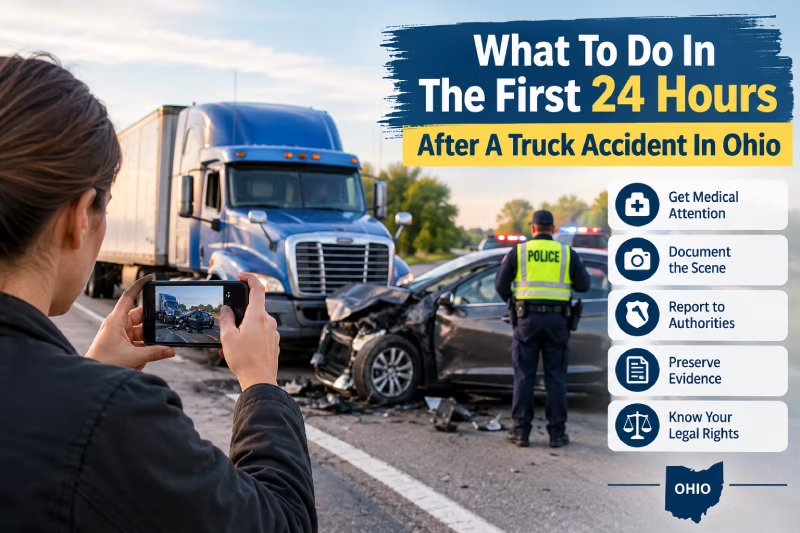
After a serious commercial truck crash, knowing what to do in the first 24 hours after a truck accident in Ohio can affect your health, your evidence, your insurance claim, and your ability to understand your legal options later.
The first day is often confusing because medical care, police investigation, insurance calls, vehicle damage, witnesses, and possible legal claims can all happen at once. This guide explains the practical steps to take during those first 24 hours, what truck drivers and injured people should avoid, what evidence may matter, and which Ohio-specific deadlines and reporting rules deserve attention.
Why the First 24 Hours Matter After an Ohio Truck Crash
A truck accident is not handled exactly like an ordinary two-car collision. A commercial vehicle may involve a trucking company, driver, carrier, owner, maintenance provider, cargo company, leasing company, insurer, and other parties.
That means evidence can exist in many places.
For example, a truck may contain an electronic logging device (ELD) that records information connected to the driver's hours of service. FMCSA explains that ELDs automatically record driving time and are designed to make records of duty status more accurate. (FMCSA)
Other evidence may include:
- Driver qualification records
- Hours-of-service records
- Electronic logging data
- Dash-camera footage
- Truck telematics
- GPS information
- Inspection records
- Maintenance records
- Cargo-loading information
- Dispatch communications
- Cellphone records
- Police reports
- Photographs and videos
- Medical records
- Witness statements
- Vehicle event data
Evidence can disappear or change. That is one reason an injured person should take the first day seriously rather than assuming that everything will still be available months later.
A simple first-day priority list
If you are physically able, focus on these priorities:
- Get emergency medical care.
- Call 911 when appropriate.
- Report the crash to law enforcement.
- Move to a safe location if possible.
- Take photographs and video when it is safe.
- Identify witnesses and obtain their contact information.
- Exchange required identifying and insurance information.
- Notify your own insurance company as required by your policy.
- Preserve documents, photographs, messages, and other evidence.
- Avoid giving a recorded statement about fault without understanding what you are being asked.
- Do not post details about the crash on social media.
- Consider speaking with an Ohio truck accident attorney before making major claim decisions.
The order can change when someone has a serious injury. Medical safety always comes first.
Step 1: Get Medical Attention Even If You Feel Fine
One of the most important mistakes after a truck collision is assuming that a person is uninjured because they can stand, walk, or talk immediately afterward.
Truck crashes can involve substantial forces. Some injuries become more noticeable later, including neck injuries, back injuries, soft-tissue injuries, concussions, and other trauma.
If emergency personnel recommend treatment, take that recommendation seriously.
If you are not transported from the scene but later develop symptoms, contact a medical professional promptly.
Why medical records matter
Medical treatment serves two purposes.
First, it protects your health.
Second, medical records create a contemporaneous record of what you reported and what healthcare professionals observed.
A useful medical record can document:
- Where you felt pain
- When symptoms began
- Physical findings
- Diagnostic testing
- Treatment recommendations
- Work restrictions
- Follow-up instructions
- Medications
- Referrals
- Whether additional treatment is needed
For example, suppose a driver feels only mild neck pain after being struck by a tractor-trailer. The driver initially assumes it will disappear. Twelve hours later, the pain becomes severe.
Waiting several days without seeking care can create unnecessary questions about the timing of the injury. Prompt medical evaluation provides a clearer record.
Do not exaggerate symptoms, but do not minimize them either. Tell the healthcare provider accurately what happened and what you are experiencing.
Step 2: Call 911 and Cooperate With the Investigation
If the crash involves injuries, a dangerous roadway condition, significant property damage, or another emergency, contact 911.
Police and other emergency personnel can:
- Secure the crash scene
- Arrange emergency medical care
- Investigate what happened
- Identify drivers and vehicles
- Speak with witnesses
- Document visible conditions
- Prepare an official crash report
Ohio law requires a law enforcement agency investigating a qualifying motor vehicle accident involving a fatality, personal injury, or property damage greater than $1,000 to forward a written report to the Ohio director of public safety within five days. Ohio's current administrative rule identifies the Ohio traffic crash report forms used for that process. (Ohio Laws)
That does not mean an injured person should wait five days to report the collision. The five-day period concerns the law enforcement agency's forwarding of its report.
What should you tell the officer?
Be factual.
Explain:
- Where you were driving
- Your direction of travel
- What you saw
- What you felt
- What happened immediately before impact
- Where the vehicles made contact
- Whether you were injured
- Whether you saw anything unusual
Avoid guessing.
If you do not know how fast the truck was traveling, say that you do not know.
If you do not remember a detail, say that you do not remember.
A truthful “I don't know” is better than a guess.
Step 3: Get Information From the Truck and Driver
If your physical condition and the crash scene allow it, document the commercial vehicle carefully.
Try to capture photographs showing:
- Truck make and model
- Tractor and trailer
- License plate
- Company name
- USDOT number
- Trailer number
- Damage to the truck
- Damage to your vehicle
- Cargo, if visible
- Road position
- Skid marks
- Debris
- Traffic signals
- Lane markings
- Nearby businesses
- Weather and roadway conditions
Do not put yourself in danger to obtain a photograph.
A damaged truck may later be repaired, moved, or sold. Photographs taken immediately after the crash can therefore become useful evidence.
Look for witnesses
Witnesses can be especially important when drivers disagree about what happened.
A witness might have seen:
- A truck changing lanes
- A vehicle following too closely
- A truck running a red light
- Sudden braking
- Cargo falling from a vehicle
- Unsafe loading
- A driver using a phone
- Road conditions immediately before the collision
If someone witnessed the crash, ask for their name and contact information.
Do not pressure the witness to take your side.
Simply preserve the person's information and let the appropriate parties investigate.
Step 4: Preserve Your Own Evidence Immediately
The first 24 hours are an excellent time to create a basic evidence folder.
Save:
- Crash photographs
- Videos
- Police information
- Tow documents
- Medical paperwork
- Emergency-room records
- Insurance information
- Vehicle repair estimates
- Receipts
- Witness information
- Text messages
- Emails
- Appointment records
- Employer communications
- Notes about missed work
Keep original photographs and videos when possible.
Do not rely only on screenshots or edited versions.
Write down what you remember
Memory changes.
Within the first day, write a private factual timeline while the events are still fresh.
For example:
2:15 p.m. — Traveling eastbound.
2:17 p.m. — Saw tractor-trailer approaching from left lane.
2:17 p.m. — Truck moved into my lane.
2:17 p.m. — Collision occurred.
2:20 p.m. — Called 911.
2:30 p.m. — EMS arrived.
Do not embellish the timeline.
If you later discover that a detail was wrong, correct it rather than trying to preserve an inaccurate version.
Step 5: Be Careful With Insurance Companies
After a commercial truck collision, you may hear from an insurance company quickly.
That is not necessarily unusual.
The truck's insurer may begin investigating almost immediately.
You should cooperate with legitimate requests for basic claim information, but understand that an insurance claim is not the same thing as a legal determination of fault or damages.
Be careful about statements such as:
- “I wasn't really hurt.”
- “I guess I caused it.”
- “I was probably speeding.”
- “I feel completely fine.”
- “It was just a minor accident.”
A casual statement can later be taken out of context.
Stick to facts.
If an insurer asks for a recorded statement, particularly when injuries are serious or fault is disputed, consider getting legal advice before providing one.
Step 6: Understand the Trucking Evidence That May Matter
Commercial truck cases often require a broader investigation than ordinary motor-vehicle claims.
Depending on the circumstances, an investigation may examine:
Driver records
These may include:
- Driver qualification information
- Training records
- License status
- Driving history
- Hours-of-service records
- Drug and alcohol testing information
- Employer communications
FMCSA states that CDL drivers operating commercial motor vehicles covered by the federal requirements are generally subject to DOT drug and alcohol testing, including certain post-accident testing requirements. The testing requirement depends on circumstances such as fatalities, qualifying injuries, citations, and tow-away crashes. (FMCSA)
Electronic data
The truck may contain data from:
- ELD systems
- GPS
- Engine modules
- Event recorders
- Fleet-management systems
- Cameras
ELD information can be particularly relevant when questions arise about hours of service and driver activity. FMCSA notes that motor carriers have recordkeeping requirements concerning electronic hours-of-service files. (FMCSA)
Vehicle and maintenance records
An investigation may also consider whether the truck had:
- Brake problems
- Tire defects
- Steering problems
- Lighting problems
- Suspension issues
- Other maintenance concerns
That is why simply asking, “Who hit whom?” may not answer every important question in a commercial truck accident.
Step 7: Ask That Evidence Be Preserved
If you are seriously injured or believe the truck driver or company may be responsible, preserving evidence can become a major issue.
A lawyer may send a preservation-of-evidence letter, sometimes called a spoliation or litigation-hold letter, to relevant parties.
The purpose is to put them on notice that particular evidence may be relevant to a potential claim.
Potential evidence can include:
- ELD data
- Dashcam recordings
- Truck camera footage
- GPS records
- Driver logs
- Maintenance records
- Inspection documents
- Dispatch records
- Cargo records
- Personnel records where legally relevant
- Communications concerning the crash
This is one area where early legal advice can be useful because the specific evidence that should be preserved depends on the facts of the collision.
Ohio Deadlines Still Matter—But They Are Not a First-Day Deadline
Ohio's general statute for bodily injury claims provides a two-year period for bringing an action based on bodily injury or injury to personal property, subject to statutory exceptions. (Ohio Laws)
Wrongful-death claims are governed by separate provisions. Ohio Revised Code § 2125.02 generally requires a wrongful-death civil action to be commenced within two years after the decedent's death, subject to exceptions. (Ohio Laws)
These deadlines should not be misunderstood.
A two-year deadline does not mean you should wait two years.
Important evidence may require attention much sooner.
A truck company may have electronic records, photographs, inspection material, internal communications, or other information that needs to be identified and preserved early.
First 24-Hour Truck Accident Checklist
Before the first day is over, try to confirm that you have addressed the following:
- Your immediate medical needs
- 911/law enforcement notification
- Basic crash information
- Photographs and video
- Witness contact information
- Driver and trucking-company information
- Insurance information
- Medical documentation
- Tow and vehicle records
- A written timeline
- Copies of important communications
- Preservation of digital evidence
- Avoidance of social-media posts
- Legal advice if the injuries or liability are significant
The first day is not about proving your entire case.
It is about protecting your health, documenting the facts, and preventing avoidable evidence problems.
In the next section, the focus should move from the immediate crash scene to the specific Ohio issues that can arise after a truck collision, including insurance claims, comparative fault, commercial trucking liability, medical bills, lost income, vehicle damage, settlement discussions, and mistakes that can weaken an otherwise valid claim.
For reference, the Ohio Revised Code and Ohio Administrative Code are the primary sources for checking current Ohio statutory and administrative requirements, while FMCSA provides the federal commercial-motor-carrier rules relevant to interstate trucking. (Ohio Laws)
Insurance Claims After an Ohio Truck Accident
A commercial truck collision can involve more than one insurance policy.
Depending on the circumstances, potentially relevant coverage may include:
- The trucking company's commercial auto policy
- A motor carrier's liability coverage
- The truck owner's policy
- A leased-vehicle policy
- Cargo-related coverage
- Your own automobile insurance
- Uninsured or underinsured motorist coverage, when applicable
- Other insurance connected to potentially responsible parties
Do not assume that the first insurer that contacts you is the only insurer involved.
For example, imagine a delivery truck strikes a passenger vehicle at an intersection. The driver works for a company, but the tractor is leased and the trailer is owned by another business. The cargo was loaded by a separate company.
The insurance and liability investigation may therefore involve several different entities.
What should you tell an adjuster?
Give accurate basic information.
You can provide information such as:
- Your name
- Date and location of the crash
- Vehicle involved
- Whether you received medical care
- Police report information
- Your insurance information
- Basic property-damage information
Be cautious about making broad statements about fault or the full extent of your injuries immediately after the crash.
A person's medical condition can change during the days and weeks after a serious collision.
A statement made immediately after a crash such as “I am fine” may simply mean that the person was able to speak and walk at that moment. It does not necessarily describe the person's eventual medical diagnosis.
Do Not Sign a Broad Medical Authorization Without Understanding It
An insurer may ask you to sign a medical authorization.
Some requests may be reasonable and connected to evaluating a claim. Others may be broader than necessary.
Before signing anything, understand:
- What records are being requested
- What dates are covered
- Whether the authorization is limited to accident-related treatment
- Who will receive the records
- How the information may be used
- Whether the authorization can be withdrawn
- Whether your attorney should review it first
Read every document before signing it.
If you have retained an attorney, send the request to the attorney rather than independently responding to every document.
Ohio Comparative Fault Can Affect a Claim
Ohio follows a modified comparative-fault system.
Under Ohio Revised Code § 2315.33, a person's recovery can be reduced according to the person's percentage of tortious conduct. Under the statute, a claimant whose share of tortious conduct is greater than the combined percentage of all other parties generally cannot recover compensatory damages in the action. (codes.ohio.gov)
This makes accurate evidence important.
Suppose a truck driver is alleged to have changed lanes improperly, while the trucking company argues that the passenger vehicle was also traveling too fast.
The issue may not simply be whether one person was “at fault.” The investigation may examine the conduct of each relevant party.
That is why you should avoid making unsupported admissions immediately after the collision.
What can affect a fault investigation?
Investigators may consider:
- Traffic signals
- Right-of-way
- Lane position
- Vehicle speed
- Following distance
- Driver attention
- Weather
- Road conditions
- Visibility
- Vehicle defects
- Maintenance
- Hours of service
- Driver conduct
- Cargo loading
- Cellphone activity
- Witness testimony
- Physical evidence
The importance of each factor depends on the particular crash.
Truck Driver Conduct May Be Investigated Separately
A commercial truck driver may be subject to federal and state rules that do not apply to an ordinary passenger-car driver.
For interstate commercial motor carriers, FMCSA regulations address subjects such as:
- Hours of service
- Electronic logging devices
- Driver qualification
- Drug and alcohol testing
- Vehicle inspections
- Maintenance
- Safety requirements
FMCSA's hours-of-service rules establish limits on driving and on-duty time for covered commercial drivers. The exact rules depend on the type of operation and circumstances. (fmcsa.dot.gov)
That can matter after a crash.
For example, if evidence suggests that a driver had been on duty for an extended period before a collision, an investigation may examine the driver's hours-of-service records.
That does not automatically establish that fatigue caused the crash. It is one factual issue that may need to be investigated.
Trucking Company Liability May Be Different From Driver Liability
One of the most important concepts in a commercial truck case is that the driver's actions may not be the only issue.
An investigation can sometimes raise questions about the conduct of the trucking company or another business.
Potential issues can include:
- Hiring
- Driver qualification
- Training
- Supervision
- Vehicle maintenance
- Inspection practices
- Scheduling
- Dispatch practices
- Cargo loading
- Safety policies
- Compliance with applicable regulations
The exact legal theory depends on the facts and the relationship between the driver and the company.
For instance, suppose a carrier allegedly failed to maintain a truck's braking system. That is a different factual question from whether the driver was distracted.
Both issues could potentially matter.
What Evidence Should You Preserve After the Accident?
Evidence preservation is one of the most important reasons to act promptly.
Electronic evidence
Modern commercial trucks can generate large amounts of electronic information.
Depending on the truck and carrier, potentially relevant evidence may include:
- ELD records
- GPS data
- Dashcam footage
- Forward-facing camera footage
- Driver-facing camera footage
- Electronic control module data
- Fleet-management data
- Dispatch messages
- Digital inspection records
Not every truck has every type of system.
The point is to identify what exists before assuming that it does not.
Vehicle evidence
Do not authorize major repairs, disposal, salvage, or destruction of a seriously damaged vehicle without considering whether the vehicle may contain important evidence.
The same principle can apply to the truck itself.
A lawyer handling a significant truck crash may consider whether an inspection should occur before repairs or other changes are made.
For example, a damaged tire, brake component, or steering part could become relevant to an investigation.
Preserve Your Phone and Digital Information
Your own phone may contain useful evidence.
Preserve:
- Crash photographs
- Videos
- Call logs
- Relevant text messages
- Navigation information
- Emails
- Insurance communications
Do not edit or manipulate the original files.
If your phone contains photographs taken immediately after the collision, keep the originals in their original form.
Also avoid deleting potentially relevant communications.
Be careful with social media
A serious truck accident is usually not the right time to post photographs or detailed explanations online.
Avoid posting:
- Photos showing physical activities that may contradict claimed limitations
- Comments about fault
- Arguments with the trucking company
- Insurance discussions
- Settlement discussions
- Statements about how badly you are injured
- Speculation about the driver
- Angry comments about witnesses or other parties
Even innocent posts can be misunderstood when viewed without context.
Document Your Medical Treatment
After the first emergency visit, keep a running record of treatment.
A simple treatment log can include:
| Date | Provider | Treatment | Symptoms/Restrictions |
|---|---|---|---|
| Sept. 24 | Emergency department | Imaging and evaluation | Neck and back pain |
| Sept. 25 | Primary physician | Follow-up | Limited movement |
| Sept. 27 | Physical therapist | Initial evaluation | Therapy prescribed |
Also preserve:
- Medical bills
- Prescription receipts
- Transportation expenses
- Diagnostic reports
- Work restrictions
- Therapy schedules
- Follow-up appointments
A complete record can make it easier to understand the financial impact of an injury.
Lost Income Can Become Part of the Claim
A truck crash may affect more than medical expenses.
An injured person might miss:
- Regular work
- Overtime
- Bonuses
- Commission
- Self-employment opportunities
- Scheduled shifts
- Business activities
Keep evidence showing the financial effect.
Useful documents can include:
- Pay stubs
- Employer statements
- Tax records
- Work schedules
- Leave records
- Disability paperwork
- Business records
- Written employment restrictions
For example, suppose a warehouse employee normally works 45 hours per week but is placed on a medical restriction that prevents heavy lifting.
The effect of that restriction should be documented rather than simply estimated from memory.
What About Vehicle Damage?
Vehicle damage should also be documented carefully.
Take photographs before repairs when practical.
Keep:
- Towing invoices
- Storage charges
- Repair estimates
- Rental-car records
- Receipts
- Total-loss documentation
- Valuation information
- Communications with insurers
If the vehicle is declared a total loss, obtain the insurer's valuation documents and review the information used to calculate the vehicle's value.
Do not assume that the first valuation automatically represents the correct amount.
When Should You Speak With an Ohio Truck Accident Attorney?
There is no universal rule that every minor collision requires a lawyer.
However, legal advice can become particularly important when:
- Someone suffered a serious injury
- Someone died
- A commercial carrier is involved
- Fault is disputed
- Multiple vehicles were involved
- Multiple companies may be responsible
- The insurer disputes the claim
- The truck driver received a citation
- There are questions about hours of service
- There may be a vehicle defect
- There may be a cargo-loading issue
- The injured person cannot work
- Long-term treatment is expected
- A settlement offer arrives quickly
A lawyer can investigate facts that may be difficult for an injured person to obtain independently.
What Does a Truck Accident Lawyer Investigate?
A detailed investigation can go beyond the police report.
Depending on the case, an attorney may examine:
The crash itself
- Accident reconstruction
- Vehicle positions
- Damage patterns
- Skid marks
- Traffic-camera footage
- Witness statements
- Road design
- Weather
- Visibility
The truck
- Inspection history
- Maintenance
- Brake condition
- Tires
- Electronic data
- Camera footage
- Load information
The driver
- Qualification
- Training
- Hours of service
- Driving history
- Testing records where legally relevant
- Employer communications
The company
- Hiring practices
- Training
- Supervision
- Maintenance procedures
- Dispatching
- Safety records
- Internal communications
Not every investigation will involve all of these categories.
The investigation should be tailored to the facts.
Be Careful About Early Settlement Offers
An insurance company may make an early settlement offer.
The offer may look attractive, especially when someone is facing medical bills, vehicle expenses, and lost income.
But before accepting a settlement, understand what rights you are giving up.
A settlement agreement can potentially resolve claims associated with the accident.
Before signing, determine:
- What claims are being released
- Whether medical expenses are included
- Whether future treatment is covered
- Whether lost income is included
- Whether liens or reimbursement claims exist
- Whether property damage is separate
- Whether the payment is final
- Whether additional claims can be brought later
Do not treat a settlement offer as free money.
It is a legal agreement with consequences.
A Practical Example
Consider a hypothetical Ohio collision.
A delivery truck changes lanes on an interstate and strikes a passenger vehicle. The passenger suffers neck and back pain and goes to an emergency department.
During the first 24 hours, the passenger:
- Obtains medical care
- Reports the collision to police
- Photographs both vehicles
- Collects witness information
- Saves medical documents
- Records the truck's identifying information
- Notifies the insurer
- Avoids making public statements about fault
- Consults an attorney because the injuries may require extended treatment
Several days later, the passenger learns that the truck had a forward-facing camera and electronic driving records.
Because the evidence was identified early, the attorney can consider appropriate steps to preserve it.
That example does not mean every case will produce the same evidence or result. It illustrates why early documentation can matter long after the crash scene disappears.
Common Mistakes to Avoid During the First Day
Some mistakes are surprisingly simple.
Saying too much
Do not speculate about speed, distance, timing, or fault.
Saying too little to your doctor
Do not hide symptoms because you think they are minor.
Posting online
Assume anything publicly posted could eventually be viewed by an opposing party.
Destroying evidence
Do not discard damaged items or delete relevant electronic information without considering whether it could matter.
Ignoring follow-up care
If a physician recommends follow-up treatment, understand the recommendation and follow it unless another medical professional advises otherwise.
Accepting a quick settlement
Do not sign a release simply because you need money immediately.
Waiting until the deadline
Ohio's statutory deadlines can be measured in years, but evidence issues can arise much sooner.
What Families Should Do When the Injured Person Cannot Handle the Process
A serious truck crash may leave someone hospitalized, unconscious, heavily medicated, or otherwise unable to manage insurance communications.
Family members can help by creating a central file containing:
- Police information
- Hospital information
- Insurance details
- Vehicle information
- Employer information
- Witness contacts
- Photographs
- Medical bills
- Important correspondence
Family members should avoid making legal admissions on the injured person's behalf.
If the situation is serious, getting legal advice early can help determine who has authority to communicate and what should happen with evidence and claims.
What Truck Drivers Should Do After a Crash
Truck drivers have a different set of practical concerns.
If you are a commercial driver involved in an accident:
- Stop safely.
- Call emergency services when appropriate.
- Follow applicable company and regulatory reporting procedures.
- Do not leave the scene unlawfully.
- Cooperate with required testing and investigation.
- Preserve required records.
- Do not alter or falsify logs.
- Do not delete messages or electronic records.
- Photograph the scene when safe.
- Record factual observations.
- Avoid arguing with other drivers.
- Do not post about the accident online.
- Obtain appropriate legal advice if the crash may result in significant liability or regulatory consequences.
Federal rules can impose specific post-accident obligations depending on the circumstances.
For example, FMCSA's drug and alcohol testing rules identify circumstances in which a commercial driver must undergo post-accident testing. (fmcsa.dot.gov)
A driver should follow the carrier's lawful accident-reporting process and applicable federal and state requirements rather than trying to decide independently which rules apply.
A 24-Hour Evidence File You Can Create
A simple folder can make the situation much easier to manage.
Folder 1: Crash
Include:
- Photos
- Videos
- Police information
- Witness details
- Truck information
- Weather notes
- Road-condition notes
Folder 2: Medical
Include:
- Hospital records
- Bills
- Prescriptions
- Appointment records
- Work restrictions
- Medical instructions
Folder 3: Insurance
Include:
- Policy information
- Claim number
- Adjuster contact information
- Letters
- Emails
- Settlement offers
Folder 4: Financial Loss
Include:
- Pay stubs
- Employer records
- Rental-car receipts
- Towing bills
- Repair estimates
- Other accident-related expenses
Folder 5: Legal
Include:
- Attorney correspondence
- Preservation letters
- Legal documents
- Settlement documents
- Important deadlines
This basic organization can save considerable time later.
The Most Important Questions to Ask After an Ohio Truck Accident
Before the first 24 hours are over, ask yourself:
Have I received appropriate medical care?
Was the collision properly reported?
Did I preserve photographs and videos?
Do I have the truck and driver's identifying information?
Did I identify witnesses?
Have I preserved my medical and financial records?
Have I avoided unnecessary statements about fault?
Have I protected potentially important electronic evidence?
Has an insurer asked me to sign something I do not understand?
Could the injuries or damages be serious enough to justify legal advice?
These questions do not determine who will ultimately win or lose a claim. They help ensure that important issues are not overlooked while the evidence is still fresh.
Sources for Ohio and Federal Rules
For current legal and regulatory information, useful primary sources include the Ohio Revised Code, Ohio Administrative Code, and Federal Motor Carrier Safety Administration. Ohio's official code provides the current text of statutes governing subjects such as motor-vehicle crashes, comparative fault, and personal-injury claims, while FMCSA publishes federal commercial-motor-carrier requirements. (codes.ohio.gov, fmcsa.dot.gov)
What Compensation May Be Available After an Ohio Truck Accident?
Once the immediate emergency has passed, the next question for many injured people is simple: Who is responsible for the financial losses caused by the crash?
The answer depends on the facts. A truck accident claim may involve compensation for medical expenses, lost income, property damage, physical pain, emotional harm, and other losses that are legally recoverable. The amount and type of damages depend on the evidence, the injuries, the parties involved, applicable insurance coverage, and Ohio law.
Economic losses
Economic damages are losses that can generally be supported with financial records.
They may include:
- Emergency medical treatment
- Hospital bills
- Diagnostic testing
- Prescription costs
- Physical therapy
- Future medical treatment
- Lost wages
- Reduced earning capacity
- Vehicle repair costs
- Towing expenses
- Rental transportation
- Other documented accident-related expenses
Keep receipts and records from the beginning.
For example, spending $300 on accident-related transportation may seem minor compared with a hospital bill of $30,000, but small expenses can add up. A complete record gives you a clearer picture of the financial effect of the collision.
Noneconomic losses
Some losses do not come with a simple invoice.
Depending on the circumstances and applicable Ohio law, a claim may also involve noneconomic damages associated with matters such as:
- Physical pain
- Emotional distress
- Loss of normal activities
- Loss of enjoyment of life
- Physical impairment
- Disfigurement
These issues are highly fact-specific.
A person with a short-term injury and a person who permanently loses the ability to perform an important activity may have very different circumstances.
Do Not Assume the Police Report Determines Liability
A police crash report can be valuable evidence, but it is not necessarily the final answer to every legal question.
An officer may document:
- Statements made at the scene
- Vehicle positions
- Apparent traffic violations
- Weather
- Road conditions
- Injuries reported at the scene
- Witness information
- Citations
However, a civil claim can require a broader investigation.
For example, a police report may indicate that a truck struck another vehicle during a lane change. A later investigation might examine the truck's camera footage, electronic data, maintenance history, witness testimony, and physical damage.
The report is one piece of the evidence.
How Accident Reconstruction Can Help
Serious truck collisions can sometimes require accident reconstruction.
A reconstruction specialist may examine:
- Vehicle damage
- Crush patterns
- Skid marks
- Vehicle weights
- Road geometry
- Traffic signals
- Vehicle positions
- Photographs
- Video footage
- Event data
- Witness accounts
- Visibility
- Timing
The purpose is to develop a fact-based analysis of how the collision occurred.
This can become particularly important when the drivers give different accounts.
Example: disputed lane change
Imagine that a tractor-trailer moves from the right lane toward the center lane and collides with a passenger vehicle.
The truck driver says the passenger vehicle moved into the truck.
The passenger says the truck entered the passenger vehicle's lane.
Photographs alone may not resolve the dispute.
An investigation could examine vehicle damage, roadway evidence, camera footage, witness statements, and other available information.
The goal is to determine what the evidence supports rather than simply accepting one driver's version.
What If the Truck Driver Was Tired?
Fatigue can become an issue in some commercial vehicle investigations.
Federal hours-of-service rules are designed to regulate the amount of time covered commercial drivers can spend driving and on duty. For drivers required to maintain records of duty status, an electronic logging device generally records driving time and helps maintain those records. FMCSA states that the ELD rule applies to most motor carriers and drivers who are required to keep records of duty status, subject to exceptions.
That means investigators may examine relevant records when fatigue or hours-of-service compliance becomes an issue.
But an hours-of-service violation alone does not automatically prove that fatigue caused a particular crash.
The evidence still needs to be evaluated in context.
What If the Truck Had a Mechanical Problem?
Mechanical defects can create another line of investigation.
Potential issues may involve:
- Brakes
- Tires
- Steering
- Lights
- Suspension
- Coupling equipment
- Trailer components
- Other safety-related systems
Maintenance records can therefore become important.
Suppose a truck's brakes appear damaged after a collision. That does not automatically establish that defective brakes caused the accident. Investigators may need to determine whether the damage occurred because of the collision or existed beforehand.
This is why preserving the vehicle can matter.
What If Cargo Was Improperly Loaded?
Cargo can also be relevant.
Improperly loaded or secured cargo may affect vehicle stability, braking, handling, or the way a trailer responds during a maneuver.
Depending on the type of shipment and operation, investigators may examine:
- Bills of lading
- Loading records
- Weight information
- Securement methods
- Cargo photographs
- Shipping documents
- Trailer information
- Communications between the carrier and shipper
Not every truck accident involves a cargo issue. But when the facts raise the question, the loading process may need to be investigated.
What If Several Companies Are Involved?
Commercial trucking can involve complicated business relationships.
A single shipment may involve:
- A motor carrier
- A truck owner
- A trailer owner
- A driver
- A shipper
- A broker
- A maintenance company
- A logistics company
- A cargo-loading company
The legal responsibility of each entity cannot be determined simply from the company name printed on the truck.
An investigation may need to establish:
- Who owned the truck?
- Who employed or contracted with the driver?
- Who controlled the driver's work?
- Who maintained the vehicle?
- Who loaded the cargo?
- Who arranged the shipment?
- Which insurance policies apply?
- Which party's conduct is connected to the alleged injury?
The answers depend on the actual contracts and facts.
What Should You Do If an Insurance Company Offers Money Quickly?
A quick offer can be tempting after an accident.
You may have:
- Medical bills arriving
- A damaged vehicle
- Lost wages
- Household expenses
- Transportation problems
- Uncertainty about future treatment
But an early settlement can create a serious problem if you later discover that your injuries are more extensive than originally believed.
Before accepting a settlement, determine whether you understand:
- The total amount being offered
- What claims the payment resolves
- Whether future medical treatment is included
- Whether lost income is included
- Whether vehicle damage is included
- Whether the agreement contains a release
- Whether medical liens or reimbursement claims exist
- Whether you are giving up additional legal rights
Once a release is signed, reopening the matter can be difficult or impossible depending on the circumstances.
What Is the Role of a Preservation Letter?
A preservation letter is a written request notifying another party that evidence may be relevant to a potential legal dispute and should be preserved.
In a truck accident case, that evidence could include:
- ELD information
- Dashcam recordings
- Driver-facing camera footage
- GPS information
- Maintenance records
- Inspection records
- Driver qualification materials
- Dispatch records
- Electronic communications
- Cargo documents
- Photographs
- Other relevant digital records
A preservation letter does not guarantee that every item will be preserved.
It is one tool used during evidence preservation and litigation preparation.
The specific language should be based on the facts and the evidence that may exist.
What Should You Do During the First Week?
Although this article focuses on the first 24 hours, the following several days are also important.
Continue medical care
Follow reasonable medical instructions and attend scheduled appointments.
If treatment becomes difficult because of cost, transportation, work, or another issue, communicate with the healthcare provider rather than simply disappearing from treatment.
Maintain a symptom record
A simple daily note can record:
- Pain level
- Sleep problems
- Mobility limitations
- Medication effects
- Missed work
- Activities you cannot perform
- Changes in symptoms
This is not a substitute for medical records.
It simply helps you remember what occurred between appointments.
Keep your financial records organized
Create a running list of accident-related expenses.
For example:
| Expense | Amount | Date | Proof |
|---|---|---|---|
| Emergency treatment | $___ | Sept. 24 | Hospital bill |
| Prescription | $___ | Sept. 24 | Pharmacy receipt |
| Towing | $___ | Sept. 24 | Invoice |
| Rental vehicle | $___ | Sept. 25 | Rental agreement |
| Lost wages | $___ | Sept. 26 | Employer record |
This becomes particularly useful when expenses accumulate over several weeks.
Important Ohio Time Limits
Ohio's general statute of limitations for an action based on bodily injury or injury to personal property is generally two years after the cause of action accrues, subject to statutory exceptions. Ohio Revised Code § 2305.10 contains the applicable statutory language and exceptions.
That deadline should not be treated as a reason to postpone an investigation.
There is a major difference between having two years to file a lawsuit and having two years to preserve the best evidence.
A dashcam recording might not be retained for two years.
A witness may move.
A person's memory may change.
A damaged vehicle may be repaired or sold.
Electronic records may have separate retention practices.
The legal deadline and the evidence timeline are not the same thing.
Wrongful-death cases have separate statutory provisions and should be evaluated under the applicable Ohio law rather than assuming the ordinary personal-injury deadline applies.
How Ohio Comparative Fault Can Affect a Claim
Ohio law provides that a claimant's contributory fault can reduce compensatory damages in qualifying tort claims. Under Ohio Revised Code § 2315.33, recovery is not barred when the claimant's contributory fault is not greater than the combined tortious conduct of the other relevant parties, but damages are reduced proportionally according to the claimant's percentage of fault.
This makes evidence especially important when liability is disputed.
Consider a hypothetical example.
A jury finds total compensatory damages of $100,000 and determines that the injured person was 20% responsible under the applicable comparative-fault rules.
A proportional reduction could affect the amount recoverable.
The actual legal analysis depends on the facts, claims, defenses, and parties involved.
What Families Should Know After a Fatal Truck Crash
A fatal truck accident creates an entirely different level of urgency.
Family members may have to deal with:
- Medical and funeral expenses
- Insurance companies
- Employment records
- Estate issues
- Probate questions
- Potential wrongful-death claims
- Dependents' financial losses
- Evidence preservation
- Multiple potentially responsible parties
Ohio's wrongful-death law contains specific rules concerning who may bring the action, damages, and time limits. Those issues should be reviewed promptly with an Ohio attorney rather than relying on general personal-injury information.
Families should also preserve the deceased person's relevant documents and electronic information rather than deleting accounts or disposing of property without considering potential evidentiary issues.
How Attorneys Can Use the First 24 Hours Effectively
For attorneys and legal professionals handling Ohio truck cases, the first day can be critical for identifying the evidence universe.
A preliminary intake should establish:
- Crash date and time
- Exact location
- Vehicle identities
- Carrier information
- Driver identity
- Employer relationship
- Injuries
- Medical treatment
- Police agency
- Witnesses
- Available photographs
- Available video
- Vehicle storage location
- Insurance information
- Potential ELD evidence
- Potential camera systems
- Cargo information
- Known citations
- Known regulatory concerns
Early attorney investigation checklist
A practical investigation may include:
- Sending preservation notices
- Identifying all potentially responsible entities
- Obtaining the crash report
- Locating witnesses
- Preserving vehicle evidence
- Requesting available surveillance
- Identifying cameras near the crash site
- Reviewing insurance coverage
- Evaluating medical records
- Documenting lost income
- Investigating trucking-company records
- Considering accident reconstruction when appropriate
The precise approach should be adjusted to the facts of the individual case.
What Truck Drivers Should Preserve
Truck drivers should also protect their own records.
Do not intentionally delete, alter, backdate, or falsify:
- ELD records
- Logs
- Messages
- Dispatch communications
- Photographs
- Inspection records
- Accident reports
- Other potentially relevant information
FMCSA explains that ELDs are intended to automatically record driving time and make records of duty status easier to track and manage.
If you are a driver involved in a serious collision, follow applicable reporting and testing requirements and seek appropriate legal advice when the circumstances warrant it.
How to Tell Whether You Need Legal Help
Consider speaking with an Ohio truck accident attorney if your situation involves serious injuries, disputed liability, substantial financial losses, death, or a commercial carrier.
You may also want legal advice if:
- The insurer denies responsibility
- The insurer says you caused the crash
- You receive a settlement offer
- The truck company has its own investigators
- The truck was repaired or moved quickly
- Important video may exist
- You suspect driver fatigue
- You suspect poor maintenance
- You believe cargo was improperly secured
- You cannot return to work
- Future medical treatment is expected
A consultation does not automatically mean that a lawsuit must be filed.
It can simply help you understand the evidence, potential claims, insurance process, and applicable deadlines.
Questions to Ask an Ohio Truck Accident Attorney
If you speak with an attorney, consider asking:
- Who may be legally responsible for the crash?
- What evidence should be preserved immediately?
- Could electronic truck records be important?
- Are there multiple insurance policies?
- How could comparative fault affect the claim?
- What medical documentation should I keep?
- How should lost wages be documented?
- Should my damaged vehicle be preserved?
- Is an accident reconstruction specialist necessary?
- What Ohio deadlines apply to my case?
- What should I do if the insurer asks for a recorded statement?
- What happens if the trucking company has already started its investigation?
A good initial consultation should leave you with a clearer understanding of what needs to happen next.
First 24 Hours: Final Action Checklist
Use this checklist as a practical reference after an Ohio truck collision.
At the scene:
- Call 911 when appropriate.
- Get emergency medical attention.
- Move somewhere safe if possible.
- Cooperate with law enforcement.
- Exchange required information.
- Photograph the vehicles.
- Photograph the roadway.
- Photograph traffic signs and signals.
- Identify witnesses.
- Record the truck's identifying information.
Before the first day ends:
- Save all photographs and videos.
- Obtain available medical documentation.
- Notify your insurer as required.
- Keep all accident-related receipts.
- Write down your factual recollection.
- Preserve texts and emails.
- Avoid social-media discussions.
- Avoid deleting relevant digital evidence.
- Be cautious about recorded statements.
- Consider whether legal advice is appropriate.
During the following days:
- Attend appropriate medical follow-up.
- Maintain treatment records.
- Track lost wages.
- Keep receipts.
- Preserve the damaged vehicle when appropriate.
- Identify potentially relevant cameras.
- Preserve potential trucking-company evidence.
- Review settlement documents carefully.
- Watch applicable Ohio deadlines.
A Simple Way to Think About the First 24 Hours
The first day after a truck accident can feel overwhelming because several different problems appear at the same time.
Think of the process in five stages:
1. Safety
Get yourself and others out of immediate danger.
2. Medical care
Address injuries and follow appropriate medical advice.
3. Documentation
Preserve photographs, witnesses, records, and other evidence.
4. Protection
Be careful with statements, releases, social media, and evidence.
5. Legal review
When injuries or losses are significant, obtain advice about liability, insurance, evidence, and deadlines.
This approach is practical because it keeps the focus on what can actually be controlled during a stressful situation.
Conclusion: Protect Your Health, Evidence, and Rights
The first 24 hours after an Ohio truck accident are not about building a complete lawsuit overnight. They are about making good decisions while the crash is still fresh and important evidence may still be available.
Medical care comes first. Report the crash appropriately, document the scene when safe, identify witnesses, preserve photographs and records, and avoid unnecessary statements about fault. If the collision involves serious injuries, significant financial losses, a commercial carrier, disputed liability, or potentially important trucking records, early legal guidance can help protect the investigation.
Ohio law provides important rules concerning accident reporting, comparative fault, and statutes of limitation. Ohio law currently requires investigating law-enforcement agencies to forward qualifying crash reports within five days, while Ohio's general bodily-injury limitations statute generally provides two years from accrual, subject to exceptions.
Those time periods should not create a false sense that there is no urgency.
Evidence can have a much shorter practical life.
A camera recording may be overwritten. A damaged truck may be repaired. A witness may become difficult to locate. Electronic information may require prompt preservation. Medical symptoms may develop over time.
The safest approach is therefore straightforward: take care of your health, document the facts, preserve evidence, be careful with insurance communications, and understand your legal options before making major decisions.
For current Ohio statutory information, consult the Ohio Revised Code, and for federal commercial-motor-carrier requirements, consult the Federal Motor Carrier Safety Administration. FMCSA explains that covered ELDs automatically record driving time and support more accurate hours-of-service recordkeeping.
This article is general educational information and is not a substitute for advice from an Ohio attorney who can review the specific facts of a truck accident. Laws, regulations, deadlines, insurance issues, and available claims can vary depending on the circumstances.
Frequently Asked Questions (FAQs)
What should I do immediately after a truck accident in Ohio?
Get to a safe location, call 911 when appropriate, obtain medical attention, cooperate with law enforcement, exchange required information, document the scene if safe, identify witnesses, preserve evidence, and notify your insurer according to your policy requirements.
Should I go to the hospital after a truck accident?
If you have symptoms or emergency personnel recommend medical evaluation, seek care. Some injuries may not be obvious immediately. A medical professional can determine what evaluation or treatment is appropriate.
Should I talk to the trucking company's insurance company?
You may need to provide basic claim information, but be careful about speculative statements or broad admissions. If the accident involves serious injuries or disputed liability, consider obtaining legal advice before giving a recorded statement or signing documents.
How long do I have to file a truck accident lawsuit in Ohio?
Ohio's general bodily-injury statute provides a two-year limitations period, subject to exceptions. Because different claims can have different rules, do not assume that every truck accident claim has exactly the same deadline.
Can I still recover if I was partly at fault?
Ohio's comparative-fault rules can permit recovery in qualifying cases when the claimant's contributory fault does not exceed the combined fault of the other relevant parties, with damages reduced proportionally.
What evidence is important in a truck accident case?
Potential evidence includes photographs, videos, witness information, police records, medical records, vehicle evidence, ELD information, GPS data, camera footage, maintenance records, inspection records, cargo documents, dispatch communications, and employment or driver records where legally relevant.
Does every truck have an electronic logging device?
Not necessarily. FMCSA's ELD rule applies broadly to covered commercial drivers who are required to maintain records of duty status, but the rules contain exceptions.
Can a trucking company be responsible for an accident?
Potentially, depending on the relationship between the company and driver and the facts establishing legal responsibility. Issues can include hiring, supervision, training, maintenance, scheduling, cargo, and other conduct. Liability must be determined from the evidence and applicable law.
What if the truck driver says I caused the accident?
Do not argue at the scene. Preserve evidence and provide factual information to law enforcement. If liability is disputed, photographs, witnesses, video, vehicle evidence, and other records may help establish what occurred.
This article provides general legal information, not individualized legal advice. Ohio truck accident claims can involve fact-specific statutes, regulations, insurance provisions, evidence issues, and deadlines. A qualified Ohio attorney can evaluate the particular facts of a collision.
Ready to take the next step?
Use our free tools to estimate your case value, organize evidence, and connect with a vetted attorney.


